UMIO News

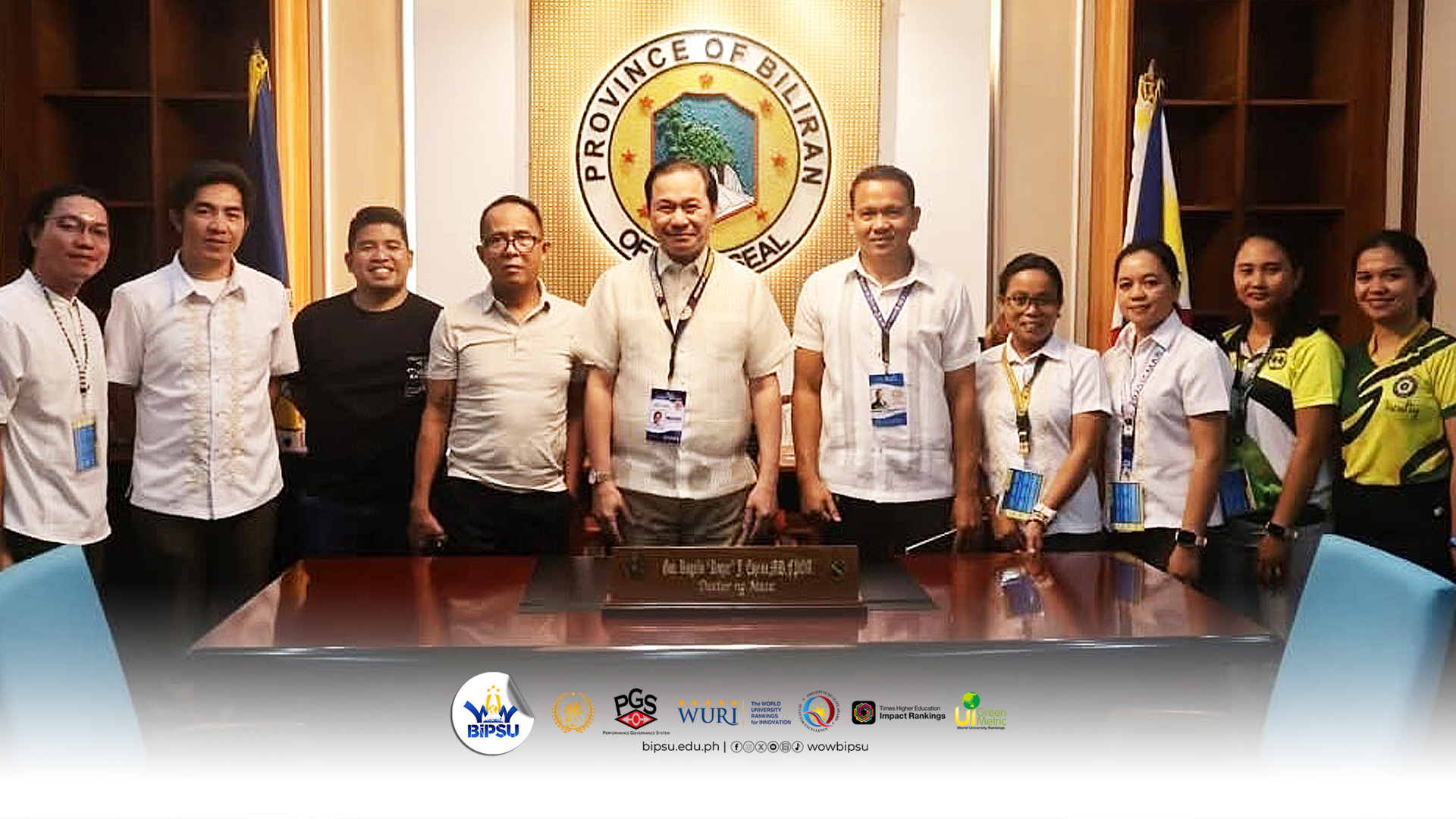
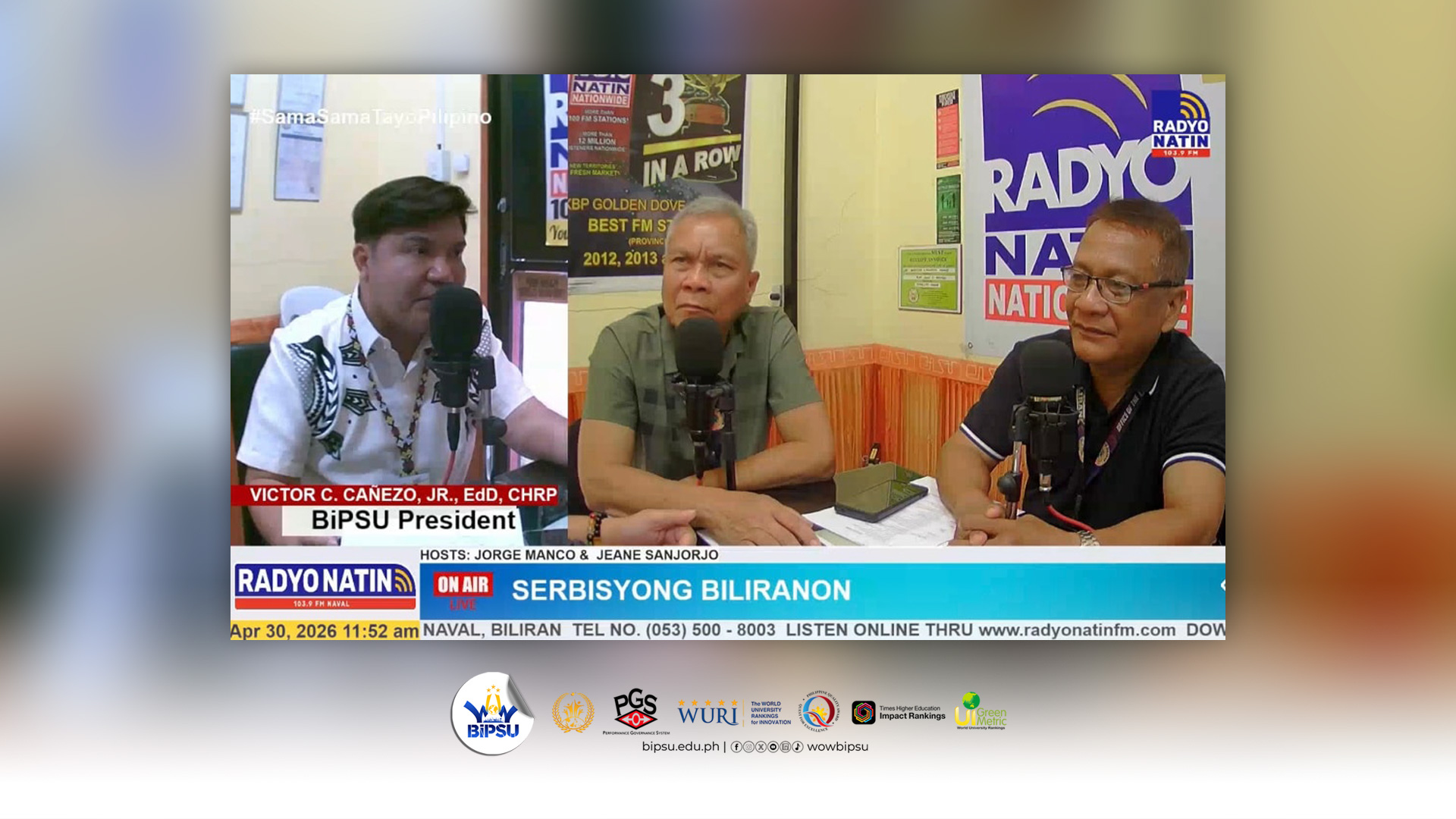
Prof. Victor C. Cañezo, Jr., EdD, CHRP, President of Biliran Province State University (BiPSU), showcased the university’s recent milestones and strategic roadmap during his guesting on the Provincial Government’s flagship radio program, “Serbisyong Biliranon ni Dok Roger Espina,” aired over 103.9 Radyo Natin, Naval on April 29.

Hosted by Mr. Jorge Mangco and Mr. Jeane Sanjorjo, the program served as a platform for Prof. Cañezo to discuss the university's "weaving of worthiness" (WoW) narrative and its impact on the province’s development.

A major highlight of the interview was the celebration of BiPSU’s historic performance at the recently concluded 39th Regional SCUAA Games in Tacloban City. For the second consecutive time, BiPSU emerged as the Overall Champion, a feat the President attributed to the collective efforts of the "WoW BiPSU" community and the strong support of local leaders.

Prof. Cañezo expressed deep gratitude to Governor Rogelio J. Espina and Congressman Gerryboy Espina for their unwavering support. He noted that the financial assistance and personal encouragement provided by the province's top officials served as a vital morale booster for the student-athletes, coaches, and trainers.

The President also provided an update regarding the revival of the Bachelor of Science in Marine Transportation (BSMT) program. With the transition of maritime education supervision to the Maritime Industry Authority (MARINA) effective January 2026, Prof. Cañezo shared a "silver lining" for the program’s reopening.

He revealed that the university has already invested approximately ₱25 million in state-of-the-art facilities, including high-fidelity simulators, to ensure 100% compliance with international standards. While a moratorium on new programs remains in place, Prof. Cañezo emphasized that BiPSU is being considered in the "pipeline" of applications.

Addressing the challenges of an ever-growing student population—now reaching roughly 13,000 learners—Prof. Cañezo detailed the university’s innovative two-shift class system. By scheduling classes from 7:00 AM to 1:00 PM and 1:00 PM to 7:00 PM, the university maximizes its facilities without compromising the quality of education or student well-being.

"This system ensures our students have enough time for both classroom learning and independent study," Prof. Cañezo explained. The success of this approach is reflected in BiPSU’s academic performance, most notably the 100% passing rate in the Nursing licensure examinations and a high overall average across various board programs.

Prof. Cañezo concluded by thanking the parents, stakeholders, and the Provincial Government for their continued partnership, reaffirming that BiPSU will continue to weave worthiness into the lives of every Biliranon. #WoWBiPSU

𝗪𝗔𝗧𝗖𝗛 𝗧𝗛𝗘 𝗙𝗨𝗟𝗟 𝗩𝗜𝗗𝗘𝗢 𝗛𝗘𝗥𝗘: https://www.youtube.com/live/ODnRS_hWLoA?si=YEv_c09P_Rh9onkT 
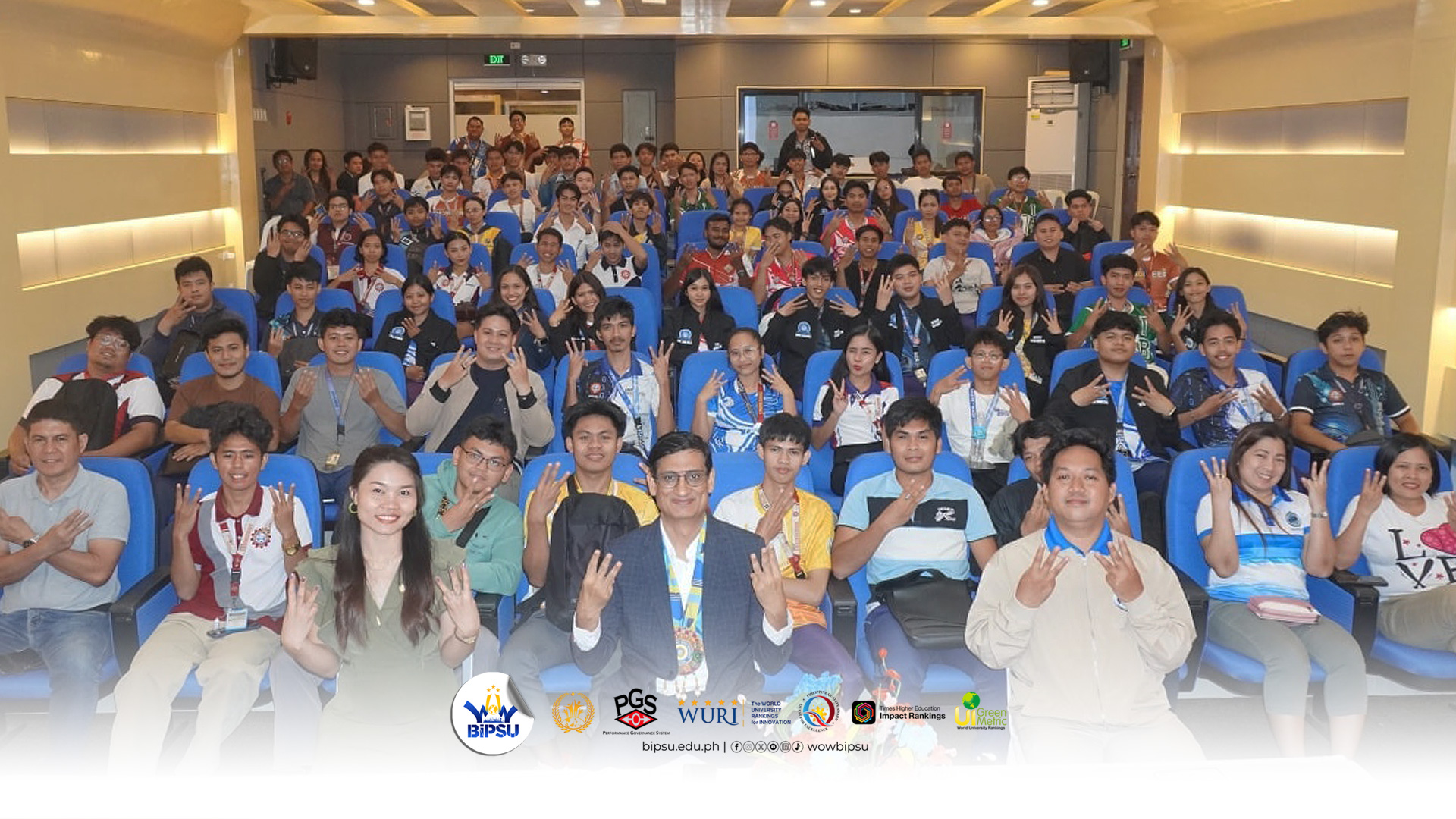
 

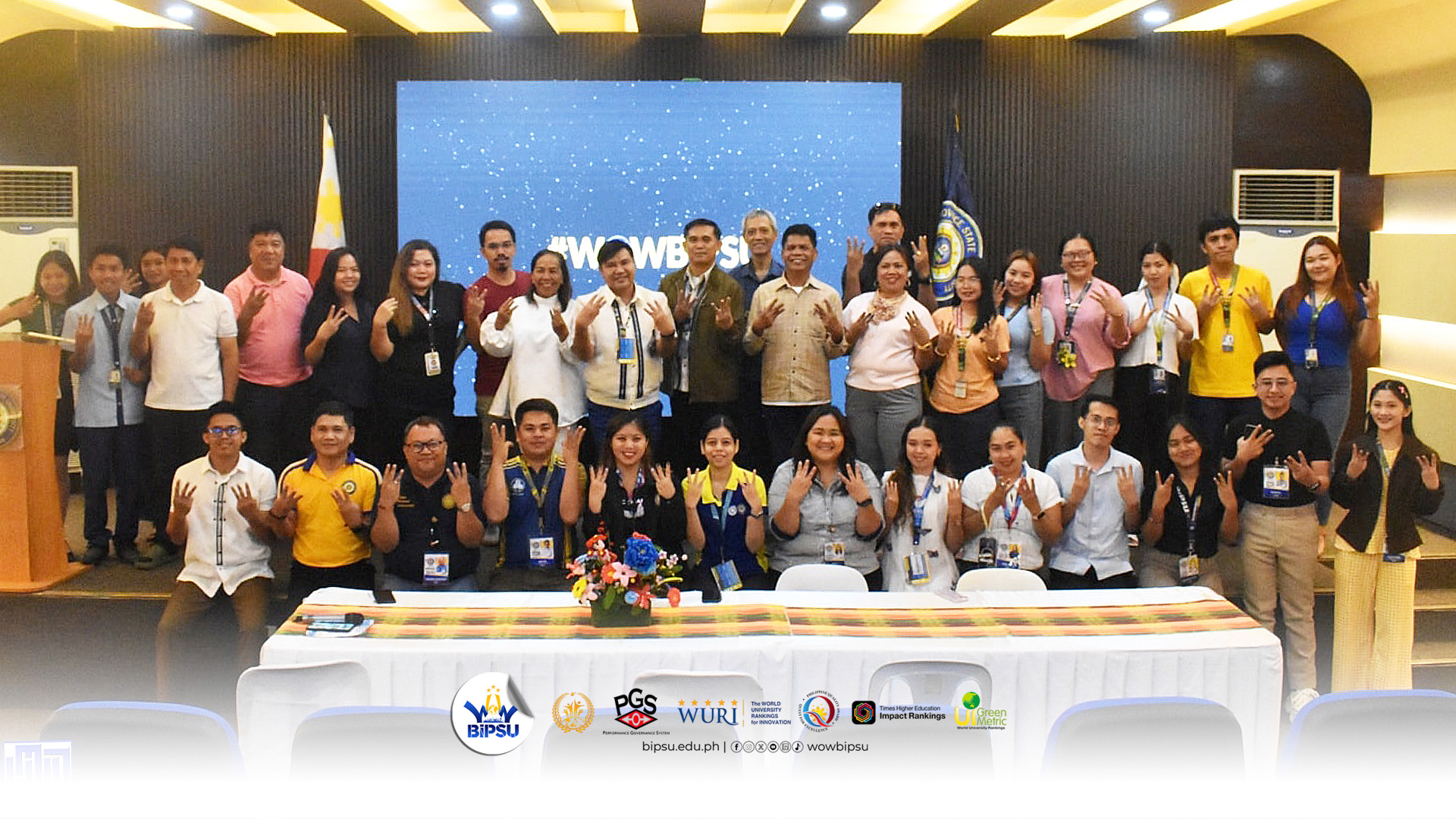
The Biliran Province State University (BiPSU) School of Arts and Sciences (SAS) successfully concluded the three-day Global Industry Leadership Lecture Series 2026, which featured Mr. Aashish Bhatia, a distinguished senior global industry leader from India. Held from April 21 to 23 at the HAVC, the event provided a high-level platform for students to gain insights from an international industry veteran.

University President Prof. Victor C. Cañezo, Jr., EdD, CHRP emphasized the importance of international collaboration in fostering academic excellence. "This lecture series underscores our commitment to broadening the global perspectives of our students and faculty," the Prof. said. "By bringing international industry leaders to our campus, we ensure that our academic programs remain relevant and responsive to the evolving demands of the global workforce."

This initiative was a collaborative effort spearheaded by SAS alongside the School of Engineering (SOE) and the School of Technology and Computer Studies (STCS), in strategic partnership with the Office of Internationalization Affairs (OIA). The series began on April 21 with "Engineering Leadership and Industry Problem Solving" for SOE students. On April 22, the focus shifted to "Strategy Leadership and Building High-Performance Organizations" for STCS students, before culminating on April 23 with a session for SAS students titled "From Classroom to Corporate: Skills for Leadership in the Real World".

Aligning with Sustainable Development Goal (SDG) 4, this lecture series represents a direct commitment to providing inclusive, equitable, and lifelong learning opportunities for the BiPSU community. In addition to the formal lectures, Mr. Bhatia conducted a tour of the university's academic facilities, including the specialized laboratories and instructional classrooms of SAS, SOE, and STCS. During these visits, he engaged in direct interactions with both students and faculty members, further strengthening the connection between academic instruction and global corporate standards.

#WoWBiPSU

In balancing the scales between those born with a silver spoon and those who live hand-to-mouth, do the underprivileged truly have the capacity to rise? This story declared it yes, with 81.80% certainty.

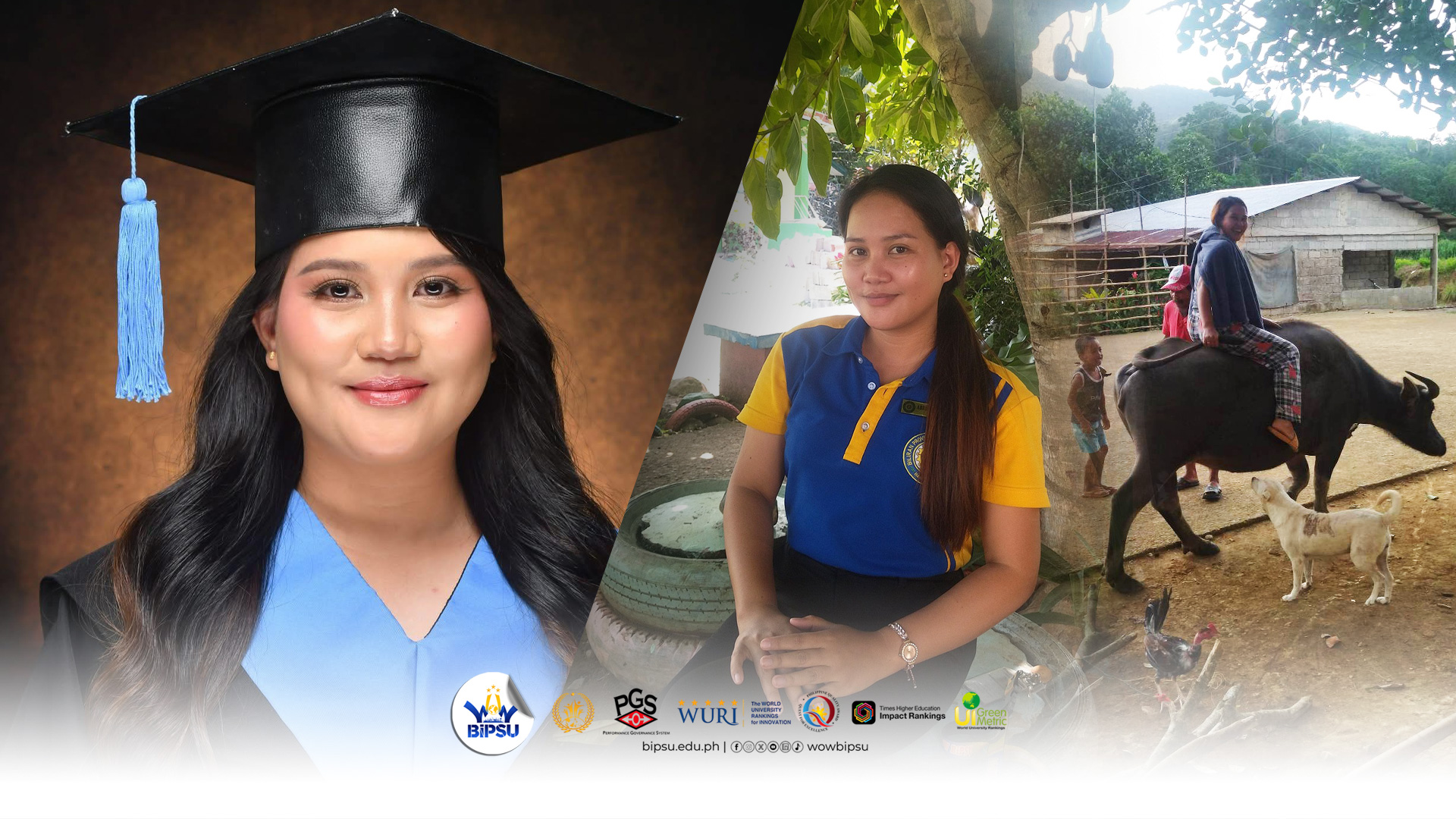
Among the five pioneering scholars of Biliran Province State University's (BiPSU) Affirmative Action Scholarship Program who earned their bachelor's degree during the 47th Commencement Exercises in May 2025 is Donna Abrigo, now a Licensed Professional Teacher (LPT) after passing the September 2025 Board Licensure Examination for Professional Teachers (BLEPT).

Abrigo, a former sales clerk, was shadowed by poverty. Heavy mist clung to the mountain foot of Sitio Palayan, Almeria, Biliran, where she grew up, wrapping the Mamanwa tribe in a quiet that only roosters and rustling leaves could break. Dawn arrived slowly there, where smoke curled from small kitchens made of wood and tin. The earth smelled of damp soil and firewood. In that highland silence, a hopeful daughter once stood barefoot outside their home, watching her mother prepare for another day of labor, her father already on the rice terraces.

In every movement of her hands—fetching water, sweeping dust from the bamboo floor, helping prepare the morning meal—there was a soft vow forming. “I will become a teacher,” she told herself, long before she understood how heavy that promise would become.

Tubong bukid ra man na siya.” [She's just a provincial bumpkin,] they would say. It was as if the mountain were a limitation. It was as if distance were destiny.

At a young age, Abrigo understood that life does not unfold evenly. She was not born with the weight of a silver spoon in her mouth but with responsibilities in her hands. As one of the impecunious children, she learned early how to balance chores with schoolwork and dreams with duty. She walked long, uneven paths to attend classes, sometimes under a punishing sun, sometimes beneath skies ready to break into rain. Her bag was never new, and her notebooks were sometimes half-filled with recycled pages.

But her eyes—her eyes carried something unborrowed and unbreakable.

When she entered college at BiPSU, the terrain changed, yet the struggle remained. The classroom was larger, the lessons heavier, and the expenses sharper. There were days when transportation fare was a computation. Days when projects required money that did not exist in her pocket. Days when hunger and humiliation tried to sit beside her in lectures. Around her were classmates with complete materials, stable allowances, and lighter worries. She smiled politely, but inside she wrestled with questions she dared not voice: Will I survive this semester? Will I make it to graduation?

The 1987 Philippine Constitution, Article XIV Section 1, promised education as a right for all. Abrigo believed it; she held onto it like scripture. But rights, she learned, must sometimes be fought for quietly—through sleepless nights, borrowed money, bravery in harder challenges, and pride swallowed whole.

There were moments she stumbled. Subjects that challenged her confidence. Situations when the mountain girl in her felt too small in the vastness of academia. Yet she stood up each time, with the stubborn strength of someone who had climbed hills since childhood.

Then came the University's Affirmative Action Scholarship Program through President Victor C. Cañezo, Jr.—a bridge she did not know was being built for someone like her. It did not erase poverty. It did not flatten the mountain. But it gave her footing. It told her, without fanfare, that BiPSU sees students beyond privilege. Somewhere within institutional policies and budget lines, there was a belief that being underprivileged does not mean being undercapable.

From being a saleslady, Abrigo received tremendous help from the said scholarship. She shared that without the program’s assistance, managing her academics alongside working would have been tough. It truly created opportunities for her and allowed her to concentrate on her studies.

“The program blessed me more than just with financial help; it also gave me hope and encouragement," said Abrigo in an interview. "As an indigent, I once thought my dreams were out of reach, but BiPSU gave me the chance to pursue my passion for education and reminded me that no dream is ever too big when you're given the right support.”

More radiant than the celestial bodies, her once-bleak hopes bloomed a rosy hue, nurtured by the invigorating benefits. With the university's Affirmative Action, she was handed a living allowance of PhP 2,500.00 per month, which also covers meals, transportation, and other incidental expenses; all other expenses not covered by UniFAST, such as Related Learning Experience (RLE), including on-the-job training (OJT) fees, internships, and other required fees of the enrolled program; ready-made uniforms prescribed by the program; and free accommodation in the dormitory.

Years later, in 2025, Abrigo successfully marched on stage as a graduate of the School of Teacher Education (STEd) in the Bachelor of Elementary Education program, where social stigma and impossible odds became a black toga and a life-defining victory.

Then, the review season for BLEPT arrived, presenting another mountain to climb.

To enrol in a review center and earn her license, a down payment was required. Money again stood like a gatekeeper. Her mother borrowed funds to secure a slot at Falculan Twin Review Centre. They chose to pay in installments, stretching the sacrifice across months. Abrigo attended sessions carrying more than review notes—she carried expectations. Mock board exams tested not only her knowledge but also her courage; low scores whispered that maybe she is not ready. Doubt pressed against her ribs.

Besides, there was fear beyond academics. Each night she walked home, wary of a mentally unstable man who waited along the road. Her steps were quick; her prayers were quicker. Still, she reviewed.

On the eve of the board examination, she could not quiet her mind. Though advised to relax, she clung to group study as if it were a lifeline. Sleep came late, and she left early. On the morning of the exam, she skipped breakfast, her stomach too tight with fear. Before she could even write her name, her hands trembled violently.

Lord, ikaw na bahala" [Lord, I surrender it to you,] she whispered, calling on every saint she could remember. “Bahalag 78%, Lord, basta pasar lang.” [Even if it’s just 78%, enough to pass.] From the first item to the last, each uncertain answer carried a prayer. Her hand ached, and her neck stiffened. Her thoughts raced toward her parents, her neighbors in the Mamanwa community, BiPSU, and every person who had believed in her. What if she fails? What if she disappoints them?

The heavens had listened before. They listened again.

When the results were released in December, Abrigo searched for her name with breath suspended between fear and hope. And there it was. Passed.

She had prayed for 78 percent, and heaven gave her an 81.80 overall rating. Eighty-three percent (83%) in general education and 81% in professional education. For the first time, her family had a teacher. Tears came not as noise but as relief. The mountain girl had crossed another summit.

Today, as an LPT, Abrigo speaks gently yet firmly about educational inequality. She knows firsthand that while the Constitution promised to provide education and make it accessible to all, the quality often bends toward those with means. Wealth studies beneath steady electricity, guided by tutors, and surrounded by quiet rooms and reliable gadgets that make learning seamless. Poverty studies just as earnestly, though often beneath flickering bulbs, in homes where space is shared, and silence is rare, turning scarcity into discipline. Yet she is a testament to the fact that when institutions decide to act—when scholarships are not mere lines in a document but lifelines extended to the margins—the gaps can narrow.

This year, the Department of Education (DepEd) bears the highest national budget allocation. Numbers that large often feel abstract, mere figures printed on paper. But in truth, those allocations breathe. They walk and must climb to the dots on the country map. They should be felt inside classrooms. Abrigo's story is empirical evidence that taxes paid by Filipinos have won another human life. Philippine taxation serves not only revenue collection but also the reduction of social inequality. A nation that invests in its learners is a nation that invests in justice.

The future is not the same landscape as yesterday. Abrigo understands that the classroom she is about to enter is not the same as yesterday's. Tomorrow is no longer chalk and blackboard alone; it is artificial intelligence, digital literacy, and the urgency to protect quality in an age of rapid change. She aspires to live the profession with courage to confront the learning gaps exposed by poverty, to navigate technology responsibly, and to embody programs like Academic Recovery and Accessible Learning (ARAL) that aim to recover and strengthen foundational skills. For her, teaching is not just employment; it is participation in a national healing.

Abrigo dedicates her feat to the Almighty God, to her parents who sacrificed without hesitation, to educators who rallied behind her, and to University President Cañezo, whose Affirmative Action initiative reached the truly marginalized. 

Sa maka-usa pa, daghan kaayong salamat po, Pres., sa pagdasig sa ako na maghuman og eskwela.” [Thank you very much, President, for encouraging me to study and pursue education.] Abrigo approached Prof. Cañezo during the Testimonial Dinner for the Newly Licensed Professional Teachers on January 20 at the university gymnasium.

Doctor of Education (EdD) himself, Prof. Cañezo, congratulated her, reaffirming that being a teacher means recognizing that a single decision can either save or wipe out a community. “I am happy for your success, and I hope that a single chance for a scholarship redraws your entire future,” he said.

In BiPSU, intergenerational responsibility is vital. With its life-changing service and by providing opportunities to those who lack them, this organization’s responsibility transcends the current generation.

From fog-filled mornings and muddy walks in her community to the solemn oath of a Licensed Professional Teacher, Abrigo's journey bends the narrative of limitation.

“As an educator produced by BiPSU, I aspire to be one who inspires and uplifts students, helping them believe in themselves and achieve their dreams just like I did,” she expressed.

The scale between silver spoon and hand-to-mouth may never be perfectly equal. But in one transformative scholarship program, one borrowed review fee, one trembling examination hand, one consistent prayer, and one institution that chose inclusion over indifference, the balance shifted in 81.80 degrees.

And somewhere in the highlands where stars remain visible against the pitch-black sky, a new light now burns—not only for her family, not only for BiPSU, but for generations yet to climb.

As a state university, BiPSU remains dedicated to creating opportunities, ensuring that education does not bend toward privilege but rises to meet those in the margins. It walks faithfully to transform public funds into public goods, to carry learners across difficult terrains, and to shape professionals whose success echoes beyond personal triumph.

#32ndHigherEducationMonth  #BiPSUAffirmativeActionScholar #WoWBiPSU 


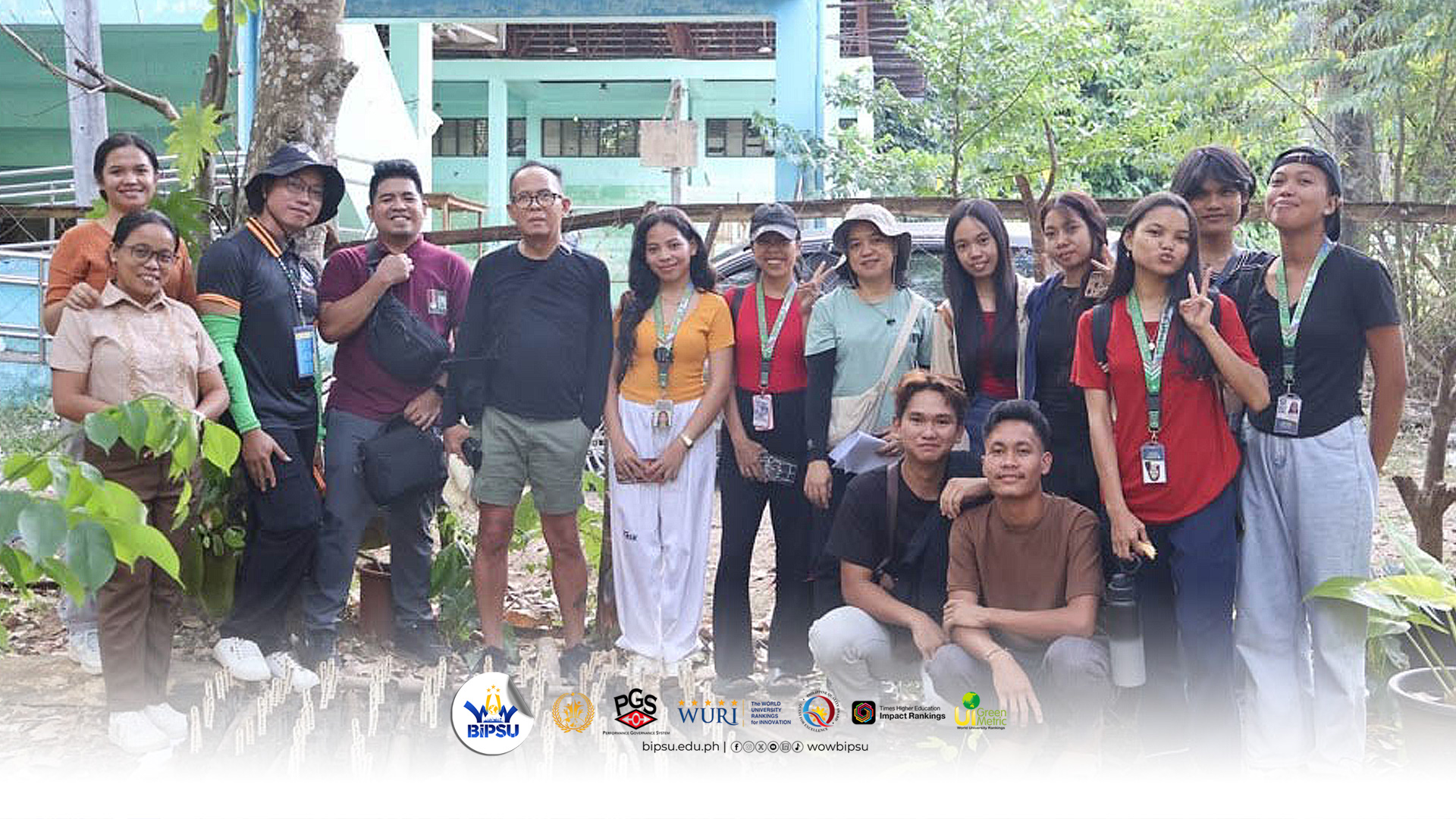
In a major step toward agricultural preservation, Balik Scientist Dr. Benildo G. de los Reyes and Biliran Province State University Biliran Campus faculty completed a comprehensive cacao collection drive on April 23. The province-wide fieldwork aims to establish a conservation genebank to safeguard local agricultural resources.

The research team gathered samples across the municipalities of Almeria, Biliran, Cabucgayan, Naval, and Kawayan. This extensive effort yielded 25 distinct accessions comprising 250 seeds, with 15 seedlings successfully potted at the BiPSU Biliran Campus. Moving forward, these collections will be conserved for long-term preservation and future utilization. They will also serve as a crucial basis for evaluating and selecting cacao varieties that are most resilient and best suited to the unique agroclimatic conditions of Biliran Province.

Commending the initiative, BiPSU President Prof. Cañezo emphasized its alignment with the university's core mission. "By preserving these local cacao varieties, we are safeguarding our agricultural heritage while paving the way for sustainable farming practices across the province. This endeavor truly embodies our continuous commitment to the weaving of worthiness through impactful, community-driven research," Prof. Cañezo stated.

The success of the collection drive was a highly collaborative effort. The university extended its deep appreciation to the hardworking students of the Biliran Campus for their vital assistance in the potting activities. Furthermore, special recognition was given to the Balik Scientist Technical and Support Team, led by Dean Randy Villarin, along with Lead Team members Mr. Rhelivyn Rosendal and Ms. Ma. Opelia Moreno, and Support Staff Ms. Melanie Moncada, Ms. Apple Cyrriel Labides, and Ms. Cindy Cortez, for their invaluable dedication to this milestone project.

#WoWBiPSU

Biliran Province State University (BiPSU), through its Strategic Communications Office (StratComm), has successfully kicked off the two-day Media Interaction and Capacity-Building Program on News Writing, Radio Journalism, and Digital Media Innovation on April 22 at the university's HyFlex Audio-Visual Center (HAV-C).

In partnership with Eastern Visayas Media Without Borders (EVMWB) and Taklub Digital News (TDN), said activity under the theme "Journalism Across Platforms and Public Information Systems" gathered BiPSU’s media personnel, schools’ media and information coordinators, and communication students for a series of lectures and workshops aimed at enhancing media competencies amid the evolving information landscape.

“In this time of infodemic era, where everyone is claiming to be a ‘media’ on their shared contents and information, it is vital that true media emerge,” [Lilitaw ang totoong media,] said University President Prof. Victor C. Cañezo, Jr.

He called to uphold truth and responsibility in media practice as the bedrock of public discourse, emphasizing the institution's commitment to developing critical and ethical communicators. Further, he underscored the relevance of this initiative to bridge the gap between academic theory and the evolving realities of the media industry.

EVMWB President Miriam Desacada shared the challenges faced by media practitioners in Eastern Visayas, particularly in relation to the growing threats of misinformation, and how the participants can serve their campus, communities, the region and the country.

During his talk on “The Battle for Truth: Government vs. the Infodemic,”  Philippine Information Agency (PIA) Regional Director Reyan Arinto discussed the issues that are blocking the quality of information received by the public posed by the modern information landscape. This includes misinformation, delayed information, information overload, lack of access, misinterpretation, trust issues, and digital divide.

Mr. Arinto also suggested strategies for improved communication, reinforcing the importance of credible information dissemination in the digital age, such as the prevalence of artificial intelligence.

Moreover, the first day showcased training on news and feature writing, facilitated by media practitioners Joyce Kahano and Elmer Recuerdo, respectively. Attendees were immersed with the foundations of news and feature articles, the core principles and elements, structural components, and writing techniques.

“Always remember to write what is right,” said Ms. Kahano who brought the impact of news to the lives of the citizens.

Said program will continue tomorrow, April 23, with workshop sessions on radio journalism and broadcast writing and on podcasting and digital audio production.

This capacity-building event reflects BiPSU’s sustained efforts to empower campus media and future journalists with relevant and practical skills, strengthening its role as a weaver of responsible and forward-looking communication in the region.

#WoWBiPSU

It feels nice earning while learning, but what's behind that?

Time and again, in the country, the image of a college student carries more than books and ambition; it carries work. Across campuses, thousands of young Filipinos juggle lectures with livelihoods, stretching their days to make ends meet while holding on to the promise that education can change the course of their lives. For many, it is already a difficult balance. But for some, roles that demand more than time and strength double the weight.

According to the Commission on Higher Education (CHED), around 216,000 students in the Philippines work while studying. That's 8% of the total college population. Figures on labor force participation include not only graduate professionals and older adults but also students striving to surmount educational and employment barriers.

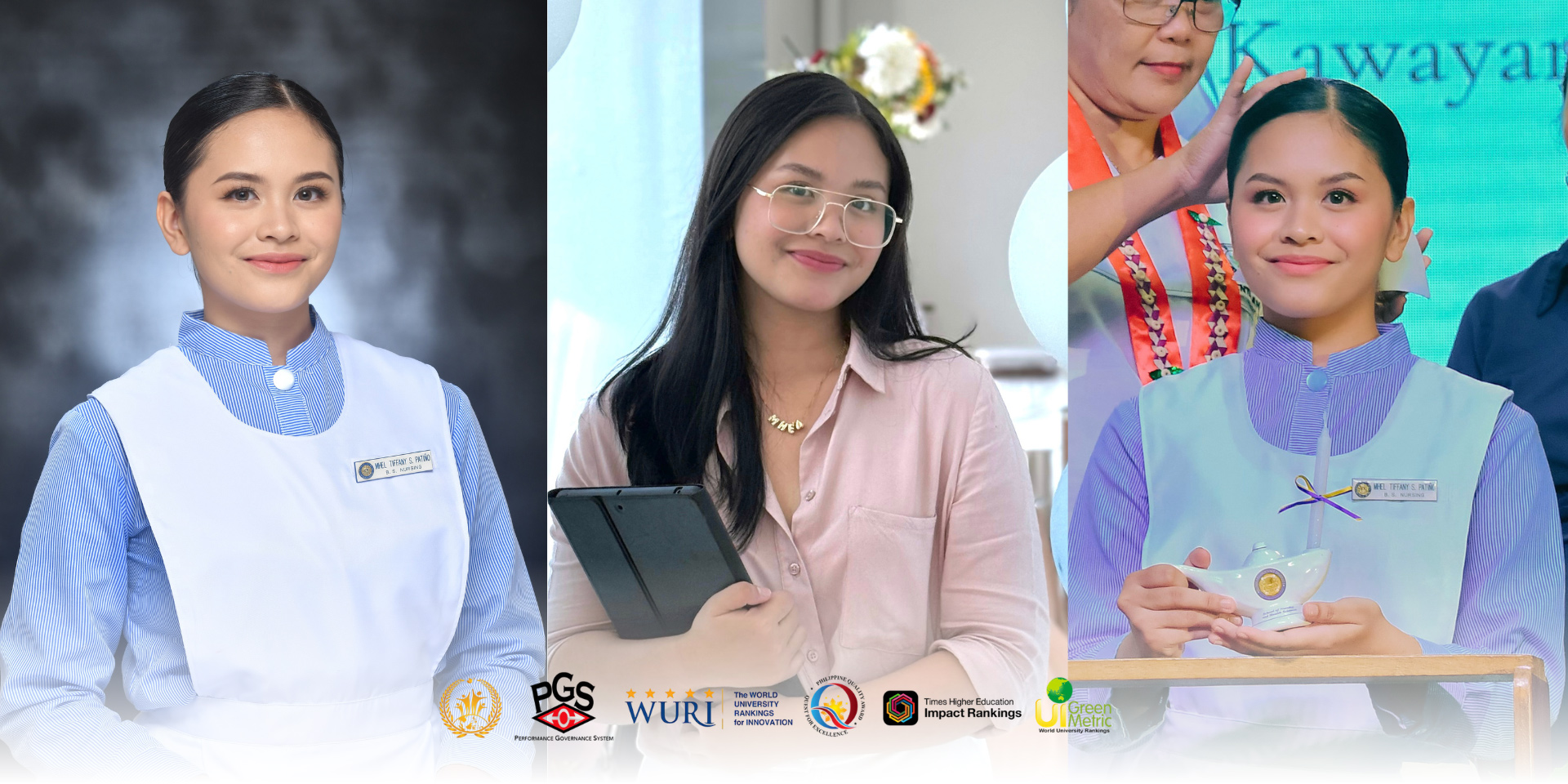
For Mhel Tiffany S. Patiño, a third-year student of Biliran Province State University (BiPSU) under the School of Nursing and Health Sciences (SNHS), being a working student is only part of the story. She is also an entrepreneur, or more so, a mother.

In a reality where youth is often defined by freedom and exploration, hers is shaped by responsibility—quiet, constant, and unyielding.

By day, she moves through the routines of a nursing student, attending classes, fulfilling clinical duties, and absorbing lessons that demand both intellect and compassion. It is a path she chose with purpose, driven by the desire not only to build a career but also to care, to serve, and to make a difference in the lives of others beyond her own.

Yet, behind the white uniform is a schedule that rarely allows breaks. Because when classes end, another shift begins.

Patiño works at night, taking on tasks that stretch for hours while the rest of the world sleeps. Before that, she returns home to her child—the center of everything. She feeds him, plays with him, and holds him close, compressing motherhood into the limited hours she can spare. Only when he finally falls asleep does she open her computer, trading rest for responsibility, pushing through exhaustion to meet deadlines and secure income.

Sleep becomes optional. Time becomes borrowed. “I had to,” she expressed, a statement that carries more truth than explanation.

Her journey into this life was not sudden, but it was early. She began working when she became a mother in her senior high school. In her first year in the nursing program, she quit her job because she was getting sick from trying to manage everything—adjusting as a freshman, caring for a one-year-old, and working as a freelancer. 

But life doesn't pause when things get challenging.

In her second year, she needed to return to work. Patiño started a digital business, then built her own flower shop, Timeless Bloom, and eventually took on freelance work again.

What she sacrifices, she understands clearly. "Being a working student comes with many sacrifices: sleep, time, and rest," she shared in an interview. “But what I feel I sacrifice the most is my youth.”

When she chose to juggle academics and a job, a part of her let go of that carefree version of herself. In nearly every aspect of her life, she is expected to behave like an adult. There are moments when she misses the version of her who only worried about school, curfews, and the small, simple things. 

And still, she continues. Because between the exhaustion and the uncertainty, there is purpose.

Her experiences in nursing education have changed her perspective on many things, thereby deepening that resolve. In hospital corridors and clinical settings, she has seen how fragile life can be. 

“Studying different diseases and actually encountering them during clinical duties made me realize that not everyone has the same capacity to do so,” she said. I have seen patients who can no longer do what they once could, and it made me realize how much of a gift it is to work, create, and keep showing up.

Since then, she’s always been reminded that it is a privilege to try.

It is in those moments that her struggles find perspective. What she endures is difficult, yes, but it is also a chance. A chance to become.

“Whenever I feel overwhelmed by all the roles I carry, I hold on to the one that grounds me the most, being a mother,” she stated. That gives her the strength to keep going and do what she needs to make things work.

Nurses are professionals dedicated to providing care and treatment to the sick and injured. Patiño aspires to become one of them, hoping to help people regain the chance to continue living and experience the things that make life meaningful.

Her story mirrors a larger truth in the Philippine landscape, where attaining a degree often walks hand in hand with economic hardship. The Constitution may declare education as a right, but for many, the quality and accessibility of that education depend on how much one can endure, how far one can stretch, and how much one is willing to sacrifice. Working students are not "others"; they are inclusive of the realities. Among them is Patiño, whose burdens extend beyond personal survival to the responsibility of raising another life.

Yet, among women's unpaid labor is the unseen balancing act between ambition and caregiving, in which many tirelessly carry both dreams and domestic roles.

If there is one thing she offers to those walking a similar path, it is not an arduous promise, but a grounded one: "Either you make sacrifices for the life you want, or the life you want becomes the sacrifice."

In addition, she wishes to inspire BiPSUnistas with a message about weaving worthiness. That, when you weave, you do not just move in a straight direction; you go back and forth, in and out. She believes that all the ups and downs, the struggles, and the sacrifices are what weave us into the people we aim to become, worthy of the life we've been trying to build.

“Some days, I feel lost or left behind, but how can I be left behind when it is my life I'm living? So, remember the only reason that matters to you, why you started,” Patiño said.

In every sleepless night, in every role she fulfills, in every step she takes toward becoming a nurse, a provider, and a mother, she is not just surviving the present. She is rewriting what the future can look like—for herself, for her child, and for heaps of Filipino youth who carry the same weight and choose, every day, to keep going.

It is a cultural phenomenon that labor extends beyond employment, especially for women, who, after class, return home to another set of responsibilities awaiting fulfillment.

While Filipino hard work and selfless sacrifice are honored this month through the observance of Labor Day and Mother's Day, BiPSU takes pride in its working students, student mothers, and working mothers in college—individuals who continue to brave life’s demands while weaving the spirit of service from their homes to the academe and into the communities they hope to uplift someday.

In the University, their stories are not seen as limitations but as living testaments of resilience, courage, and determination. Behind classrooms are students fighting battles beyond academics: earning wages, raising children, supporting families, and still choosing to pursue education despite the burdens they carry each day. Their journeys reflect the very heart of what education should stand for: creating opportunities for those willing to rise, no matter how difficult the climb may be.

And perhaps that is the reminder their stories leave behind: not that success arrives all at once, but that endurance matters. You do not have to solve everything today. You don’t even have to be great today. Just don't quit today.

Sometimes, the bravest thing a person can do is simply to keep showing up. And for BiPSU, that is already a significant achievement.

#WoWBiPSU

In a significant move to strengthen the agricultural landscape of the province, DOST-Balik Scientist Dr. Benildo G. de los Reyes recently conducted a series of high-level courtesy visits to key stakeholders across Biliran. This engagement marks the beginning of his re-engagement under the Department of Science and Technology (DOST) Balik Scientist Program, with Biliran Province State University (BiPSU) serving as the host institution for his mission to advance local genetic research.

During his provincial tour, Dr. de los Reyes met with BiPSU President Prof. Victor C. Cañezo, Jr. to align the university’s research goals with the program’s objectives. Expressing his full support for the initiative, Prof. Cañezo emphasized the institutional impact of the collaboration. "We are deeply honored to have Dr. de los Reyes with us as we continue to weave worthiness into our research and development initiatives. This partnership is a testament to BiPSU’s commitment to becoming a hub for scientific innovation that directly benefits our local farmers and secures the agricultural future of Biliran Province," the University President stated.

Dr. de los Reyes also secured vital support from provincial and municipal leaders, including Provincial Governor Rogelio J. Espina, MD, FPOA and Biliran Mayor Grace Casil. The collaborative nature of the initiative was further emphasized through consultations with Biliran Provincial Agriculturist Mr. Brian Sinangote, as well as Municipal Agriculturists Ms. Genna Cordeta of Cabucgayan and Mr. Laurence Christian Mangco of Naval.

The primary focus of Dr. de los Reyes’ re-engagement is the systematic collection of cacao and ube genetic resources. These efforts are designed to support the development of a robust biological infrastructure for Biliran. Both cacao and ube are identified as critical crops for island ecosystems like Biliran due to their natural suitability to the local agro-climatic conditions. Furthermore, these crops hold immense economic promise, driven by rising global and domestic demand for high-quality cacao and ube-based products, which could significantly boost the income of local farming communities.

A central component of this scientific initiative is the establishment of a specialized germplasm repository at the BiPSU-Biliran Campus. This facility is intended to conserve diverse genotypes of these high-value crops, serving as a foundational resource for future agricultural innovation. By maintaining this repository, the university and its partners aim to conduct long-term research on crop improvement, including the identification of high-quality varieties that meet industrial standards.

Beyond simple conservation, the project seeks to address practical farming challenges by developing varieties with enhanced pest and disease resistance. By optimizing yield performance tailored specifically to the unique environment of Biliran Province, the initiative led by Dr. de los Reyes and BiPSU positions the province as a potential hub for sustainable and science-driven agriculture in the region.

#WoWBiPSU

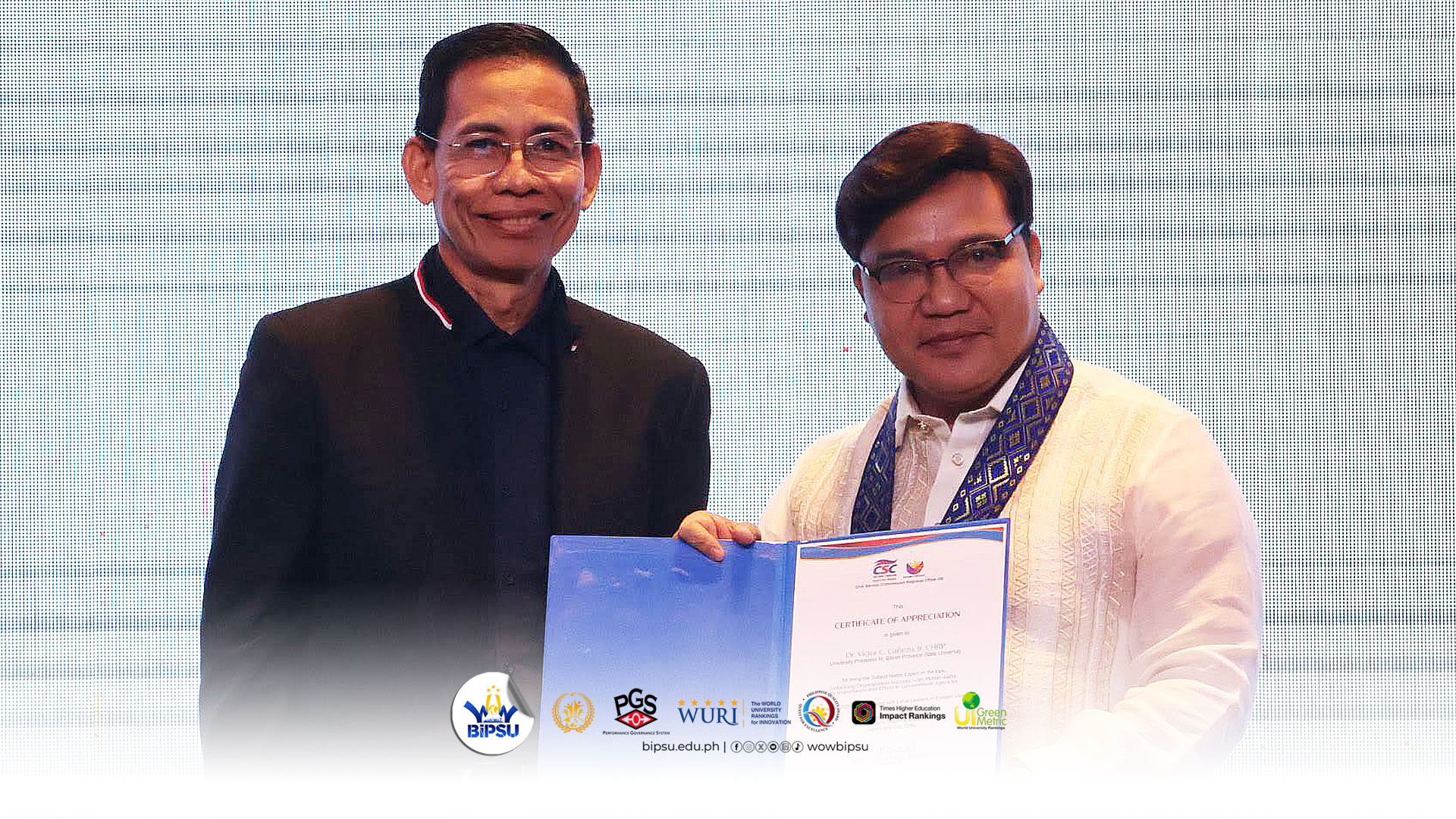
Biliran Province State University (BiPSU) President and PASUC 8 Chair, Prof. Victor C. Cañezo, Jr., emphasized the transformative power of strategic human resource management during the 2026 Conversations with Local Leaders in Eastern Visayas (CLLEV) held at the Jpark Island Resort & Waterpark in Lapu-Lapu City, Cebu, on April 16.

Addressing a distinguished assembly of regional leaders, Prof. Cañezo shared the university’s administrative evolution through his presentation, "Unlocking Organizational Success with PRIME-HRM." He asserted that the Program to Institutionalize Meritocracy and Excellence in Human Resource Management (PRIME-HRM) transcends its reputation as a mere administrative checklist, serving instead as a vital instrument for institutional integrity.

The university president highlighted that BiPSU’s journey from its island roots to achieving global recognition was fueled by a deliberate focus on fixing internal systems to empower its workforce. Prof. Cañezo noted that by anchoring institutional transformation on meritocracy and continuous learning, the university has successfully aligned its governance with its broader organizational purpose.

During his speech, Prof. Cañezo underscored the link between systemic efficiency and human capital, stating that fixed systems naturally lead to empowered personnel, which in turn drives the entire institution forward. He expressed his gratitude to the Civil Service Commission (CSC) Regional Office VIII, led by Regional Director Atty. Marilyn E. Taldo, and CSC Biliran Provincial Director Michael M. Dela Cruz, for their continued partnership in the university's pursuit of excellence.

The CLLEV serves as a critical platform for leaders across Eastern Visayas to exchange best practices in governance. Prof. Cañezo’s participation highlights BiPSU’s growing influence as a model for organizational maturity and systemic reform within the Philippine higher education landscape.

#WoWBiPSU

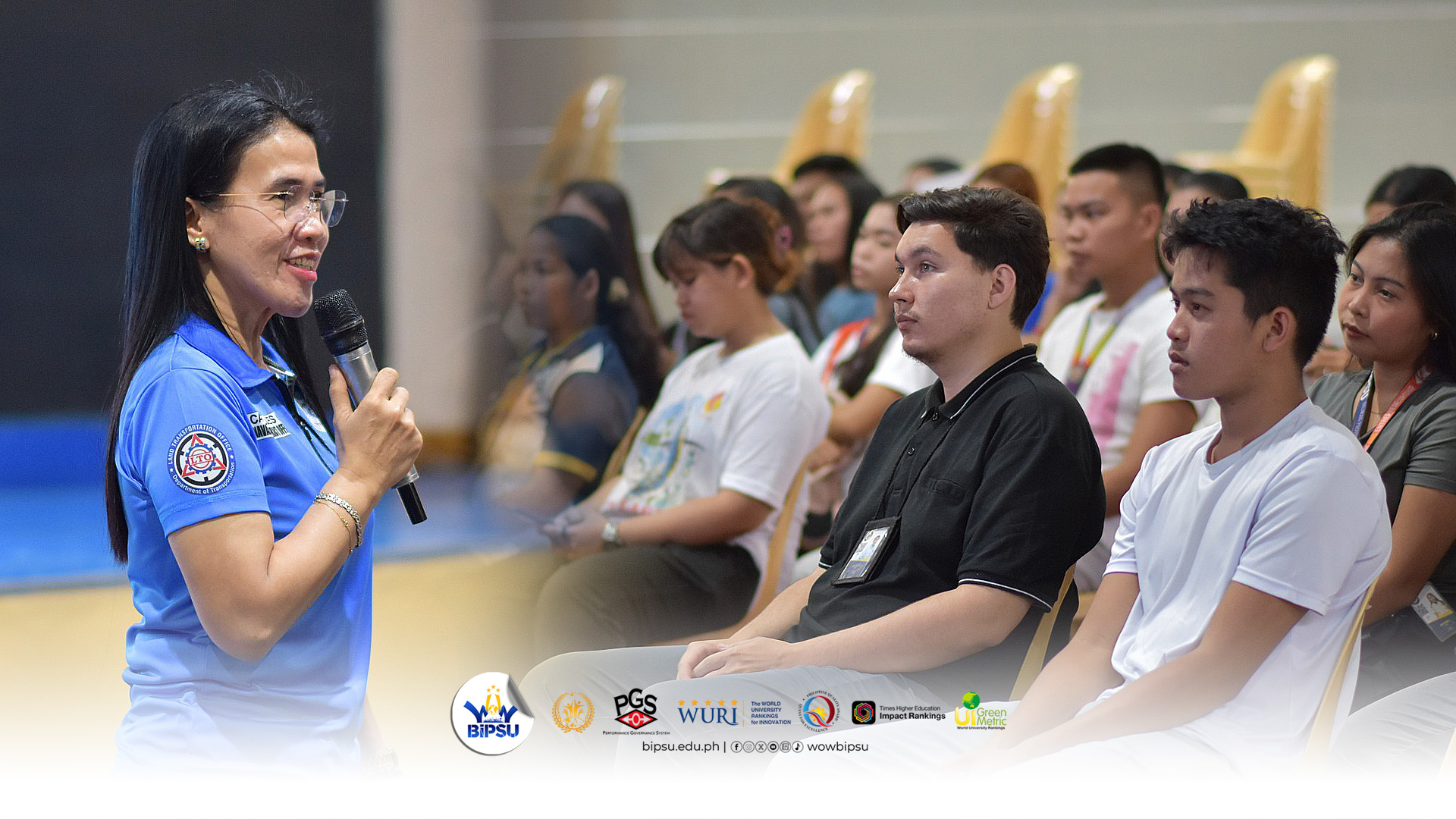
In a proactive move to promote road safety and institutional welfare, Biliran Province State University (BiPSU) partnered with the Land Transportation Office (LTO) to conduct a Free Theoretical Driving Course (TDC) specifically for BiPSUnista students and university employees. The two-day session was held on April 17-18, 2026, at the University Gymnasium.

The initiative aimed to equip members of the university community with the essential knowledge required to become responsible road users. By offering this 15-hour mandatory course for free, the university and the LTO sought to ease the financial burden on students and staff who are applying for their initial student driver’s permit.

The TDC sessions were led by LTO Naval District Office Chief Ms. Carmenia Caballes, who provided expert instruction on the critical components of road safety and legal compliance.

The event was facilitated through the collaborative efforts of the Office of the Vice President for Student, Internationalization, and Strategic Partnerships (OVPSISP) and the University Media and Information Office (UMIO).

Dr. Maribel N. Zipagan, Vice President for Student, Internationalization, and Strategic Partnerships, graced the event and emphasized that the activity underscores the university's dedication to expanding opportunities through meaningful external collaborations and ensuring that student services remain a top priority.

University President Prof. Victor C. Cañezo, Jr. expressed his support for the program, highlighting its role in the holistic development and safety of the university's stakeholders.

"Through this partnership, we are not only providing a free service but also fostering a culture of discipline and responsibility among our students and employees," Prof. Cañezo said. "Ensuring that our BiPSUnistas are well-informed and law-abiding motorists is another way we weave worthiness into the lives of our community members."

The program covered critical modules including land transportation laws, traffic signs, rules and regulations, and the fundamentals of defensive driving. Beyond the technicalities of operating a vehicle, the course highlighted the university's dedication to building a safe driving culture within the campus and the province.

This collaboration aligns with the LTO’s mission to bring government services directly to stakeholders and reflects BiPSU’s dedication to providing practical support to its human resources and student body. The training served as a foundational step for participants in their journey toward becoming disciplined and law-abiding motorists.

#WoWBiPSU

𝘛𝘩𝘪𝘴 𝘢𝘳𝘵𝘪𝘤𝘭𝘦 𝘤𝘰𝘯𝘵𝘳𝘪𝘣𝘶𝘵𝘦𝘴 𝘵𝘰 𝘵𝘩𝘦 𝘊𝘏𝘌𝘋 𝘈.𝘊.𝘏.𝘐.𝘌.𝘝.𝘌. 𝘈𝘨𝘦𝘯𝘥𝘢 𝘣𝘺 𝘢𝘥𝘷𝘢𝘯𝘤𝘪𝘯𝘨 𝘛𝘩𝘳𝘶𝘴𝘵 𝘝𝘐: 𝘌𝘹𝘵𝘦𝘯𝘴𝘪𝘰𝘯 𝘢𝘯𝘥 𝘊𝘰𝘮𝘮𝘶𝘯𝘪𝘵𝘺 𝘌𝘯𝘨𝘢𝘨𝘦𝘮𝘦𝘯𝘵 𝘵𝘩𝘳𝘰𝘶𝘨𝘩 𝘴𝘵𝘳𝘢𝘵𝘦𝘨𝘪𝘤 𝘱𝘢𝘳𝘵𝘯𝘦𝘳𝘴𝘩𝘪𝘱𝘴 𝘵𝘰 𝘧𝘰𝘴𝘵𝘦𝘳 𝘱𝘶𝘣𝘭𝘪𝘤 𝘴𝘢𝘧𝘦𝘵𝘺 𝘢𝘯𝘥 𝘴𝘰𝘤𝘪𝘢𝘭 𝘳𝘦𝘴𝘱𝘰𝘯𝘴𝘪𝘣𝘪𝘭𝘪𝘵𝘺. 𝘐𝘵 𝘢𝘭𝘪𝘨𝘯𝘴 𝘸𝘪𝘵𝘩 𝘵𝘩𝘦 𝘜𝘯𝘪𝘵𝘦𝘥 𝘕𝘢𝘵𝘪𝘰𝘯𝘴 𝘚𝘶𝘴𝘵𝘢𝘪𝘯𝘢𝘣𝘭𝘦 𝘋𝘦𝘷𝘦𝘭𝘰𝘱𝘮𝘦𝘯𝘵 𝘎𝘰𝘢𝘭 4, 𝘸𝘩𝘪𝘤𝘩 𝘢𝘪𝘮𝘴 𝘵𝘰 𝘦𝘯𝘴𝘶𝘳𝘦 𝘪𝘯𝘤𝘭𝘶𝘴𝘪𝘷𝘦 𝘢𝘯𝘥 𝘦𝘲𝘶𝘪𝘵𝘢𝘣𝘭𝘦 𝘲𝘶𝘢𝘭𝘪𝘵𝘺 𝘦𝘥𝘶𝘤𝘢𝘵𝘪𝘰𝘯, 𝘢𝘯𝘥 𝘚𝘋𝘎 17, 𝘸𝘩𝘪𝘤𝘩 𝘦𝘮𝘱𝘩𝘢𝘴𝘪𝘻𝘦𝘴 𝘴𝘵𝘳𝘦𝘯𝘨𝘵𝘩𝘦𝘯𝘪𝘯𝘨 𝘵𝘩𝘦 𝘮𝘦𝘢𝘯𝘴 𝘰𝘧 𝘪𝘮𝘱𝘭𝘦𝘮𝘦𝘯𝘵𝘢𝘵𝘪𝘰𝘯 𝘢𝘯𝘥 𝘳𝘦𝘷𝘪𝘵𝘢𝘭𝘪𝘻𝘪𝘯𝘨 𝘨𝘭𝘰𝘣𝘢𝘭 𝘱𝘢𝘳𝘵𝘯𝘦𝘳𝘴𝘩𝘪𝘱𝘴. 𝘍𝘶𝘳𝘵𝘩𝘦𝘳𝘮𝘰𝘳𝘦, 𝘵𝘩𝘪𝘴 𝘳𝘦𝘱𝘰𝘳𝘵 𝘧𝘰𝘭𝘭𝘰𝘸𝘴 𝘵𝘩𝘦 𝘖𝘊𝘊𝘔𝘈𝘖 𝘨𝘶𝘪𝘥𝘦𝘭𝘪𝘯𝘦𝘴 𝘧𝘰𝘳 𝘚𝘵𝘢𝘵𝘦 𝘜𝘯𝘪𝘷𝘦𝘳𝘴𝘪𝘵𝘪𝘦𝘴 𝘢𝘯𝘥 𝘊𝘰𝘭𝘭𝘦𝘨𝘦𝘴, 𝘱𝘳𝘰𝘮𝘰𝘵𝘪𝘯𝘨 𝘪𝘯𝘴𝘵𝘪𝘵𝘶𝘵𝘪𝘰𝘯𝘢𝘭 𝘪𝘯𝘪𝘵𝘪𝘢𝘵𝘪𝘷𝘦𝘴 𝘵𝘩𝘢𝘵 𝘦𝘯𝘩𝘢𝘯𝘤𝘦 𝘱𝘶𝘣𝘭𝘪𝘤 𝘢𝘸𝘢𝘳𝘦𝘯𝘦𝘴𝘴 𝘰𝘧 𝘤𝘰𝘭𝘭𝘦𝘤𝘵𝘪𝘷𝘦 𝘦𝘥𝘶𝘤𝘢𝘵𝘪𝘰𝘯𝘢𝘭 𝘢𝘯𝘥 𝘤𝘰𝘮𝘮𝘶𝘯𝘪𝘵𝘺 𝘴𝘦𝘳𝘷𝘪𝘤𝘦 𝘨𝘰𝘢𝘭𝘴.


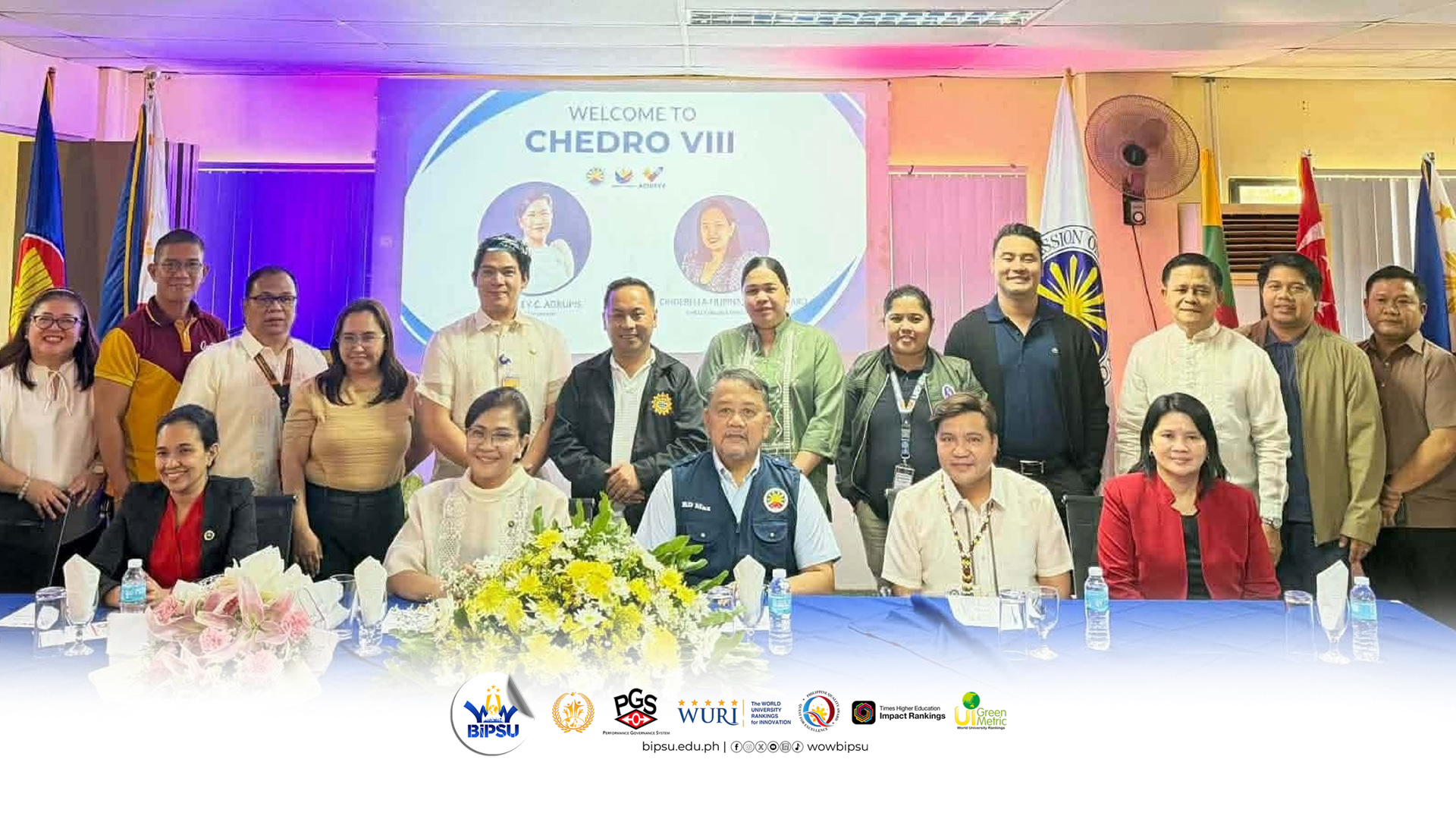
Prof. Victor C. Cañezo, EdD, CHRP, President of Biliran Province State University (BiPSU) and Chairperson of the Philippine Association of State Universities and Colleges (PASUC) Region VIII, formally expressed his unwavering support for the Commission on Higher Education’s (CHED) new strategic framework during a high-level visit to the region in April.

The commitment was made during the visit of CHED Chairperson Dr. Shirley C. Agrupis and Executive Director Atty. Cinderella Filipina Benitez-Jaro to Tacloban City on April 14, 2026. The visit served as a platform for the commission to engage with academic leaders in Eastern Visayas and push for a more unified and transformative approach to Philippine tertiary education.

In his dual capacity as BiPSU President and PASUC Region VIII Chair, Prof. Cañezo delivered a Message of Support for the CHED ACHIEVE Agenda. This roadmap, initiated by Chair Agrupis upon her assumption of office, focuses on building future-ready institutions through data-driven reforms, innovation-driven human capital formation, and enhanced global competitiveness for the 2025–2030 period.

A highlight of the engagement was Prof. Cañezo’s presentation of the BiPSU ACHIEVE Agenda directly to the CHED Chairperson. By mirroring the national framework at the institutional level, the university aims to ensure that its local programs and developmental goals are perfectly aligned with the broader national vision for higher education. This strategic alignment underscores the university's dedication to being a proactive partner in the commission's reform efforts, ensuring that the progress of the institution directly contributes to the success of the BiPSUnistas and the communities they serve throughout the region.

As the higher education sector navigates a rapidly changing global landscape, the unified front shown by PASUC Region VIII and individual SUCs like BiPSU signals a robust era of collaboration intended to elevate Eastern Visayas as a hub for academic excellence and sustainable innovation. Through this partnership, the university continues its steadfast commitment to excellence, ensuring that every initiative remains anchored in the transformative weaving of worthiness.

#WoWBiPSU

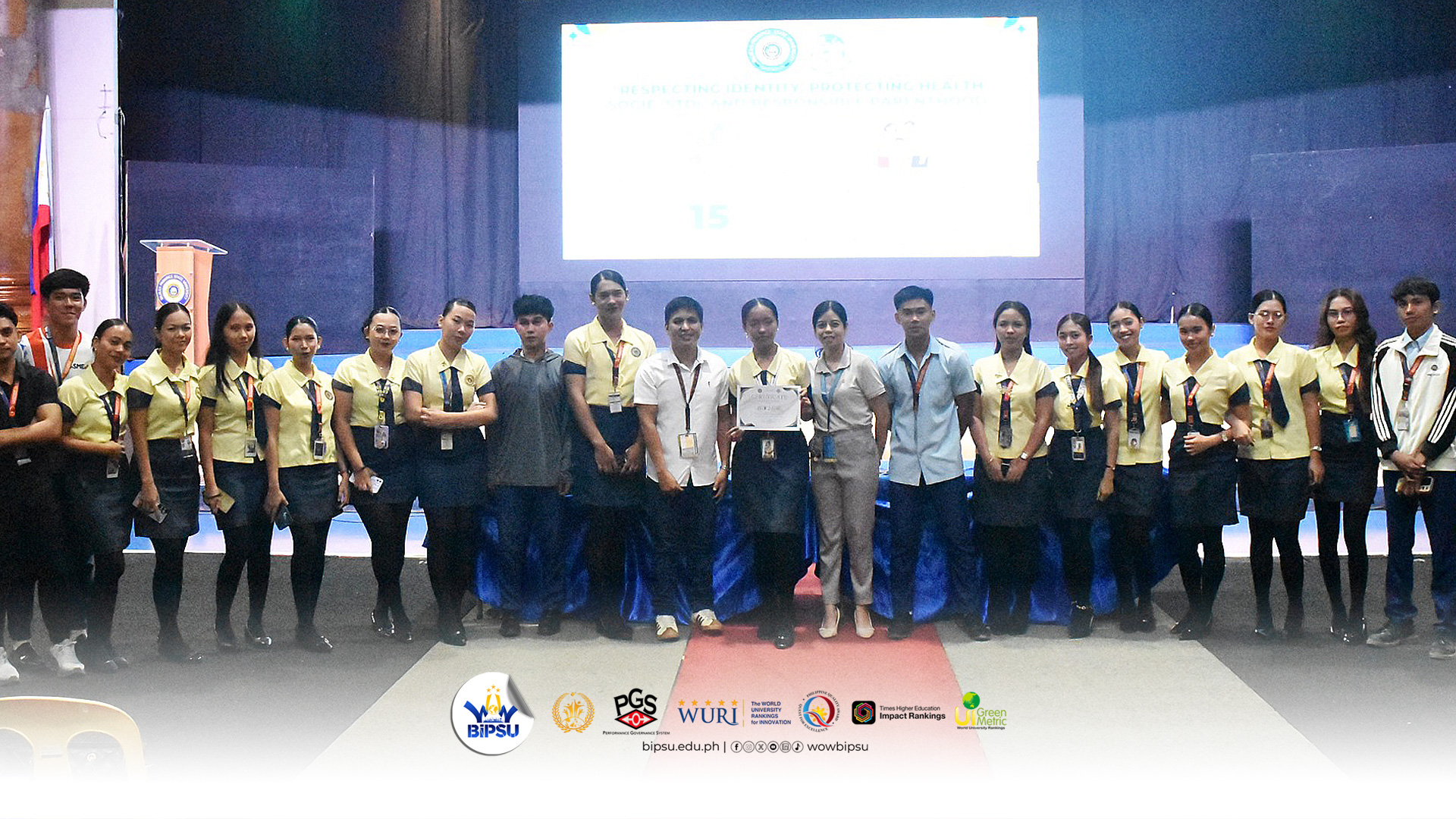
In an effort to dismantle misinformation and foster a culture of inclusivity, the third-year Bachelor of Science in Tourism Management (BSTM) students from the School of Management and Entrepreneurship (SME) successfully led a comprehensive seminar titled “Respecting Identity, Protecting Health: SOGIE, STDs, and Responsible Parenthood” on April 15 at the BiPSU Gymnasium.

The day-long initiative drew an audience of 311 second-year BSTM students, transforming the venue into a safe space for dialogue on traditionally sensitive topics. Organized as part of the GE–Understanding the Self course, the activity aimed to bridge the information gap that often leads to social stigma or poor health decisions among the youth.

The morning session opened with Dr. Ronabelle C. Bentor, SME GAD Secretariat, who unpacked the complexities of Sexual Orientation, Gender Identity, and Expression (SOGIE). Dr. Bentor’s discussion focused on practical applications of respect and the importance of recognizing diverse identities within everyday interactions.

Shifting the focus to physical well-being, Dr. Ana Maria Jagunos, University Physician, led the afternoon sessions on sexually transmitted diseases (STDs) and family planning. Dr. Jagunos emphasized the critical roles of prevention, early treatment, and informed consent in personal health management.

University President Prof. Victor C. Cañezo, Jr. lauded the initiative, underscoring the university's role in shaping holistic individuals.

"This student-led endeavor exemplifies our commitment to creating a 'weaving of worthiness' within our campus. By addressing these vital issues openly, we are not only educating our students on health and identity but also empowering them to become empathetic and responsible members of society," Prof. Cañezo stated.

The event was also conducted with the support of Dr. Erwin G. Salvatierra,  Vice President for Academic Affairs and Lifelong Learning Dr. Maribel N. Zipagan, Vice President for Student, Internationalization, and Strategic Partnerships and the concurrent Dean of the School of Tourism and Hospitality Dean #WoWBiPSU 

𝘛𝘩𝘪𝘴 𝘢𝘳𝘵𝘪𝘤𝘭𝘦 𝘤𝘰𝘯𝘵𝘳𝘪𝘣𝘶𝘵𝘦𝘴 𝘵𝘰 𝘵𝘩𝘦 𝘊𝘏𝘌𝘋 𝘈.𝘊.𝘏.𝘐.𝘌.𝘝.𝘌. 𝘈𝘨𝘦𝘯𝘥𝘢 𝘣𝘺 𝘢𝘥𝘷𝘢𝘯𝘤𝘪𝘯𝘨 𝘛𝘩𝘳𝘶𝘴𝘵 𝘝𝘐: 𝘌𝘭𝘦𝘷𝘢𝘵𝘪𝘯𝘨 𝘵𝘩𝘦 𝘘𝘶𝘢𝘭𝘪𝘵𝘺 𝘰𝘧 𝘎𝘦𝘯𝘥𝘦𝘳 𝘢𝘯𝘥 𝘋𝘦𝘷𝘦𝘭𝘰𝘱𝘮𝘦𝘯𝘵 (𝘎𝘈𝘋) 𝘢𝘯𝘥 𝘏𝘰𝘭𝘪𝘴𝘵𝘪𝘤 𝘚𝘵𝘶𝘥𝘦𝘯𝘵 𝘞𝘦𝘭𝘭-𝘣𝘦𝘪𝘯𝘨 𝘵𝘩𝘳𝘰𝘶𝘨𝘩 𝘪𝘯𝘤𝘭𝘶𝘴𝘪𝘷𝘦 𝘦𝘥𝘶𝘤𝘢𝘵𝘪𝘰𝘯 𝘢𝘯𝘥 𝘩𝘦𝘢𝘭𝘵𝘩 𝘢𝘸𝘢𝘳𝘦𝘯𝘦𝘴𝘴. 𝘐𝘵 𝘢𝘭𝘪𝘨𝘯𝘴 𝘸𝘪𝘵𝘩 𝘵𝘩𝘦 𝘜𝘯𝘪𝘵𝘦𝘥 𝘕𝘢𝘵𝘪𝘰𝘯𝘴 𝘚𝘶𝘴𝘵𝘢𝘪𝘯𝘢𝘣𝘭𝘦 𝘋𝘦𝘷𝘦𝘭𝘰𝘱𝘮𝘦𝘯𝘵 𝘎𝘰𝘢𝘭𝘴 3, 4, 5, 𝘢𝘯𝘥 10, 𝘸𝘩𝘪𝘤𝘩 𝘢𝘪𝘮 𝘵𝘰 𝘦𝘯𝘴𝘶𝘳𝘦 𝘩𝘦𝘢𝘭𝘵𝘩𝘺 𝘭𝘪𝘷𝘦𝘴, 𝘲𝘶𝘢𝘭𝘪𝘵𝘺 𝘦𝘥𝘶𝘤𝘢𝘵𝘪𝘰𝘯, 𝘨𝘦𝘯𝘥𝘦𝘳 𝘦𝘲𝘶𝘢𝘭𝘪𝘵𝘺, 𝘢𝘯𝘥 𝘳𝘦𝘥𝘶𝘤𝘦𝘥 𝘪𝘯𝘦𝘲𝘶𝘢𝘭𝘪𝘵𝘪𝘦𝘴. 𝘍𝘶𝘳𝘵𝘩𝘦𝘳𝘮𝘰𝘳𝘦, 𝘵𝘩𝘪𝘴 𝘳𝘦𝘱𝘰𝘳𝘵 𝘧𝘰𝘭𝘭𝘰𝘸𝘴 𝘵𝘩𝘦 𝘖𝘊𝘊𝘔𝘈𝘖 𝘨𝘶𝘪𝘥𝘦𝘭𝘪𝘯𝘦𝘴 𝘧𝘰𝘳 𝘚𝘵𝘢𝘵𝘦 𝘜𝘯𝘪𝘷𝘦𝘳𝘴𝘪𝘵𝘪𝘦𝘴 𝘢𝘯𝘥 𝘊𝘰𝘭𝘭𝘦𝘨𝘦𝘴, 𝘱𝘳𝘰𝘮𝘰𝘵𝘪𝘯𝘨 𝘪𝘯𝘴𝘵𝘪𝘵𝘶𝘵𝘪𝘰𝘯𝘢𝘭 𝘪𝘯𝘪𝘵𝘪𝘢𝘵𝘪𝘷𝘦𝘴 𝘵𝘩𝘢𝘵 𝘦𝘯𝘩𝘢𝘯𝘤𝘦 𝘱𝘶𝘣𝘭𝘪𝘤 𝘢𝘸𝘢𝘳𝘦𝘯𝘦𝘴𝘴 𝘰𝘧 𝘤𝘰𝘭𝘭𝘦𝘤𝘵𝘪𝘷𝘦 𝘦𝘥𝘶𝘤𝘢𝘵𝘪𝘰𝘯𝘢𝘭 𝘢𝘯𝘥 𝘴𝘰𝘤𝘪𝘢𝘭 𝘳𝘦𝘴𝘱𝘰𝘯𝘴𝘪𝘣𝘪𝘭𝘪𝘵𝘺 𝘨𝘰𝘢𝘭𝘴.


Page 5 of 66

Brilliance. Innovation. Progress. Service and Unity
P.Inocentes St, Naval, Biliran Philippines 6560

(053) 507-0014
op@bipsu.edu.ph