
UMIO News

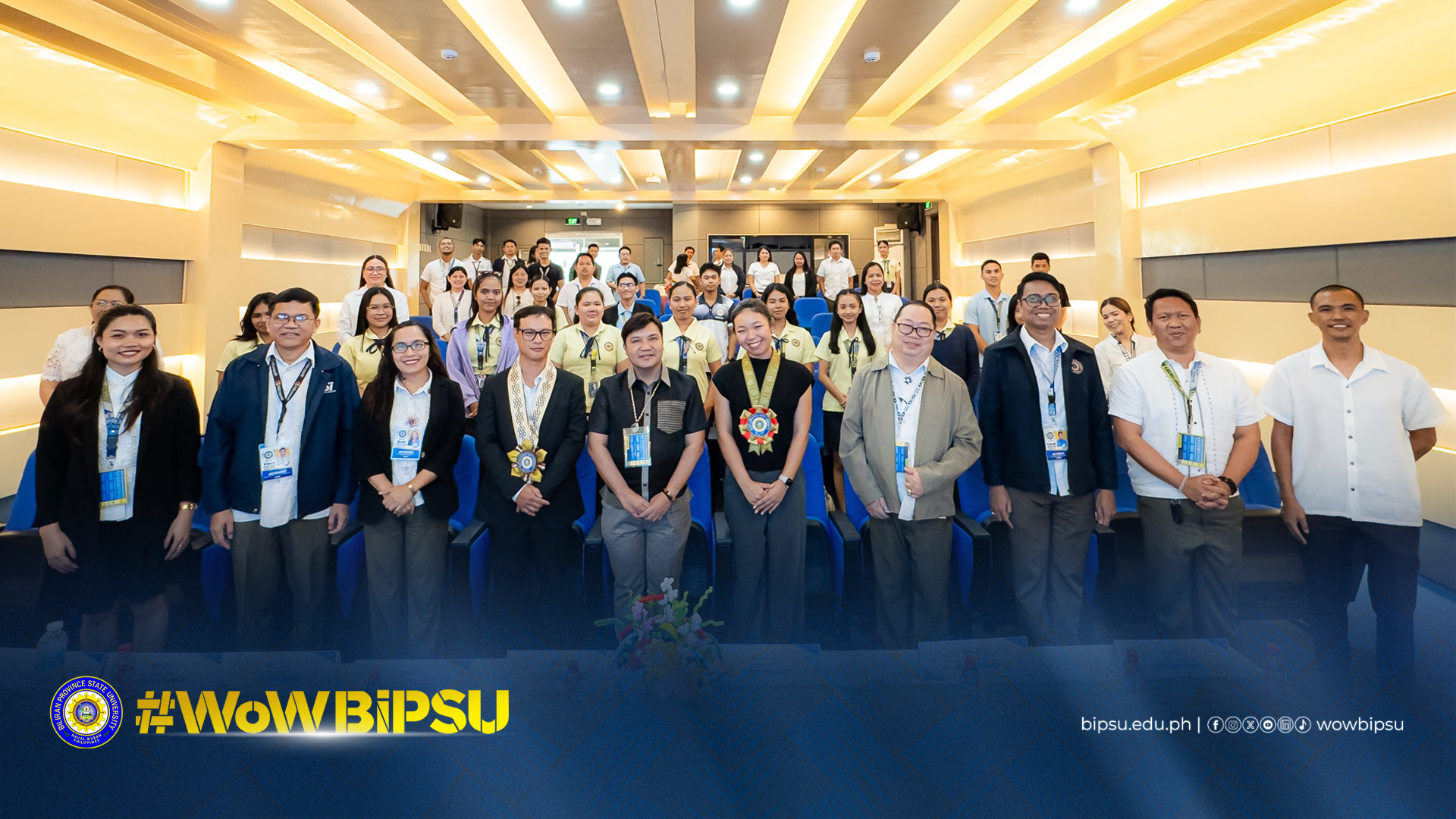
Biliran Province State University achieved a 100% passing rate among its first-time takers in the August 2026 Mechanical Engineering Licensure Examination (MELE), based on the results released by the Professional Regulation Commission (PRC) on August 13. Both of the University’s two first-time takers passed the examination, giving BiPSU a perfect passing rate in the category.

BiPSU also recorded a 60% passing rate among its repeaters, with three of the five examinees passing the licensure examination. Overall, five out of seven BiPSU examinees passed, giving the University a 71.43% passing rate, which is higher than the 36.95% national passing rate.

The five new Mechanical Engineers of BiPSU are Engr. Jay-V D. Tabocolde, Engr. Jasper King D. Sañosa, Engr. Ed Sunbrenn O. Alarde, RMP, Engr. James Alfred C. Gonzaga, and Engr. Cheno Marvic M. Vicera.

The University congratulates its new Mechanical Engineers and extends its appreciation to the Mechanical Engineering Department, chaired by Engr. Ramon L. Pitao, Jr., and the School of Engineering, headed by its Dean, Engr. Carmel Sigrid D. Docallos, as well as the entire BiPSU community, for their support and efforts toward this achievement.

#WoWBiPSU
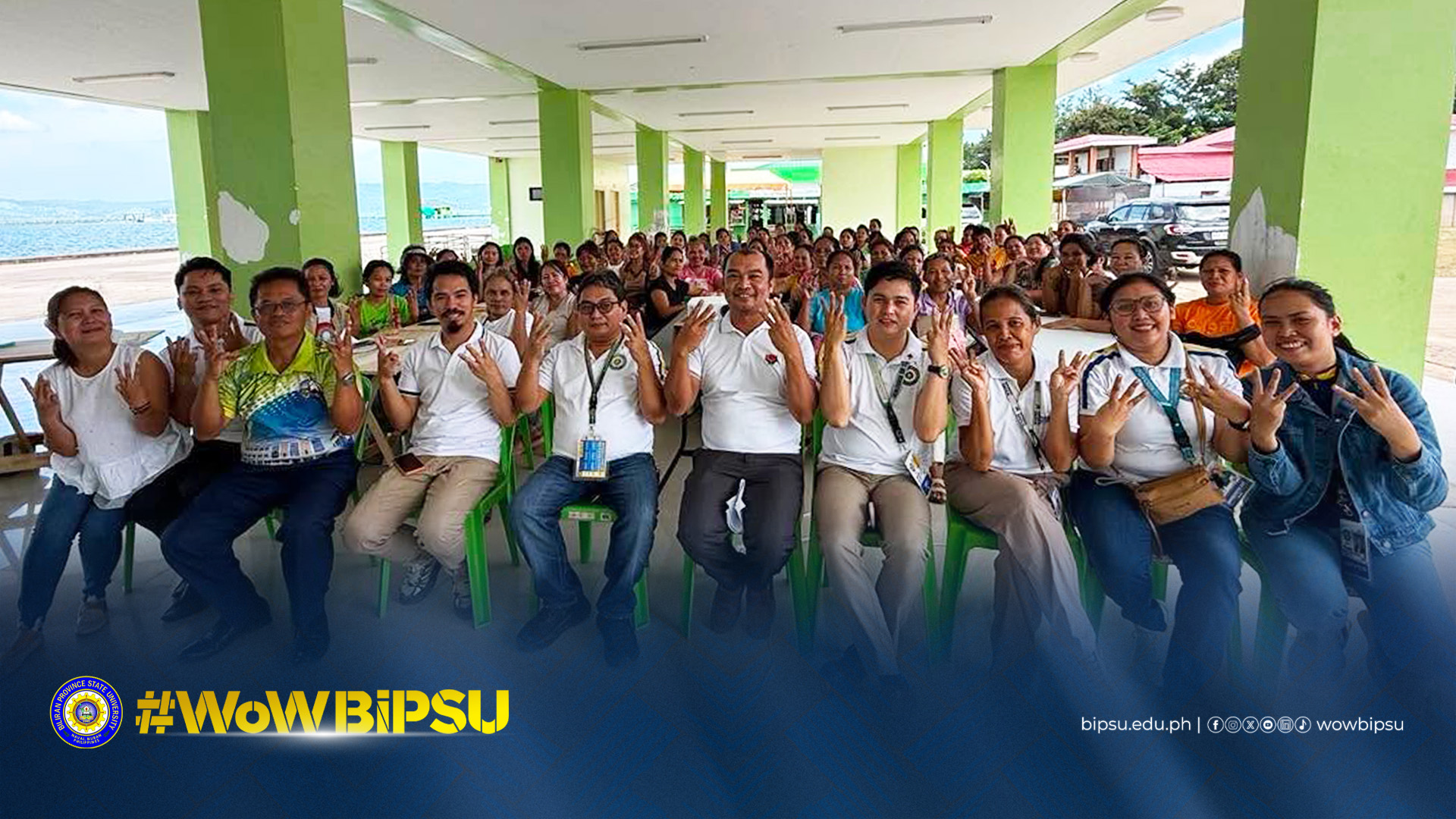
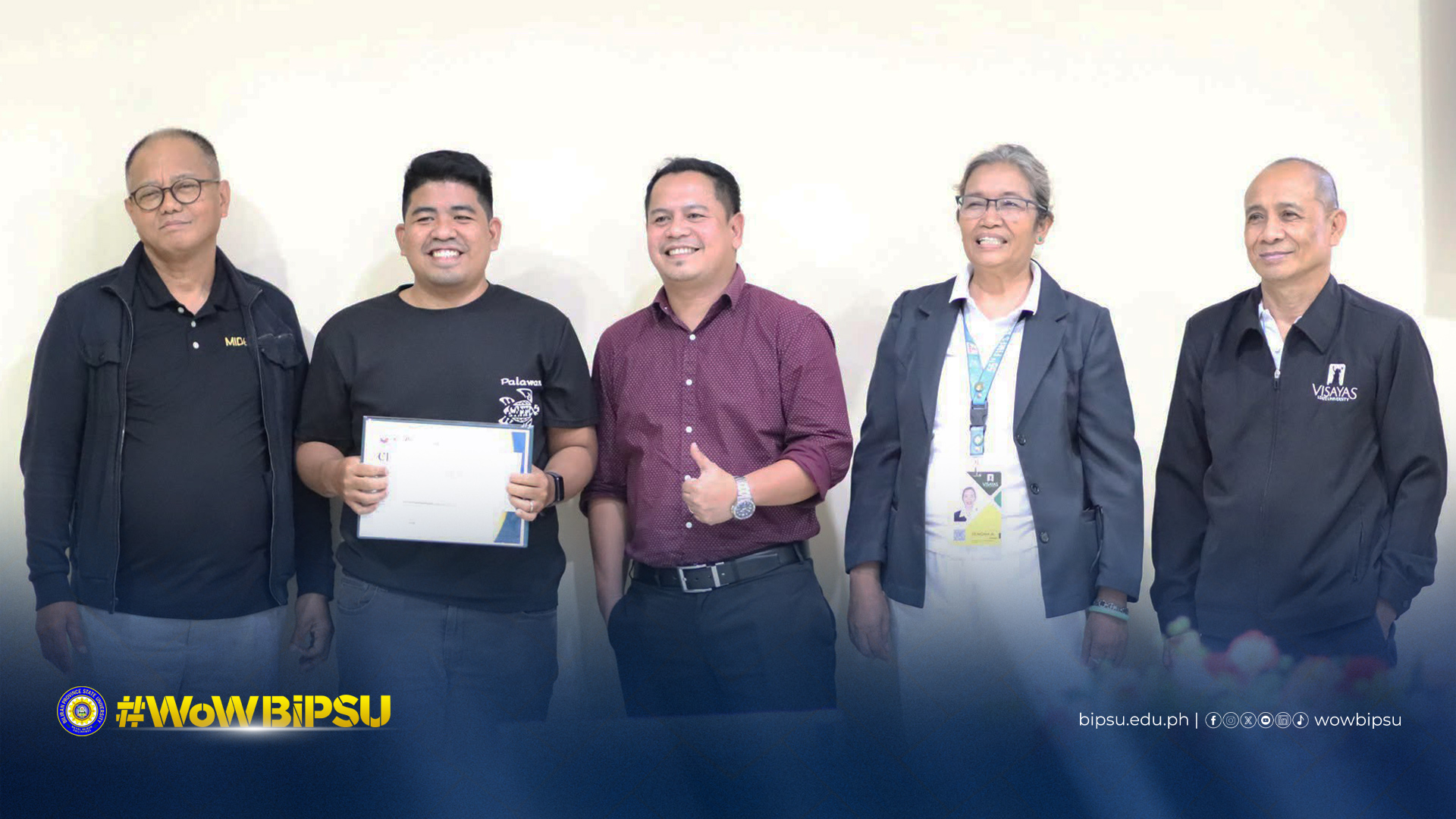
Biliran Province State University (BiPSU), through its Extension Services and Societal Impact, in partnership with the Department of Social Welfare and Development (DSWD) – Sustainable Livelihood Program (SLP), officially launched the four-part implementation of Project U.P.L.I.F.T. – Unlocking Prosperity through Livelihood, Innovation, Financial Literacy, and Technopreneurship on August 12 at the Agribusiness Center, Biliran, Biliran.

The launching marked the first of four scheduled training activities under the project, which aims to strengthen the financial management capabilities of livelihood beneficiaries and members of community-based associations in the municipalities of Biliran and Cabucgayan.

The first session gathered beneficiaries from the Municipality of Biliran for training on Basic Cash Flow and Simplified Bookkeeping, providing participants with practical knowledge and skills they can apply in managing livelihood activities, monitoring financial transactions, and maintaining organized financial records.

Providing the technical expertise for the activity were faculty members from the BiPSU School of Business and Management (SBM).

Mr. James Lambit, speaker for Basic Cash Flow, guided the participants in understanding the movement of money within a livelihood enterprise. His discussion focused on monitoring income and expenses, managing available cash for daily operations, and using cash flow information to support sound financial decision-making and business sustainability.

Meanwhile, Mr. Ric Curso, resource person for Simplified Bookkeeping, introduced participants to practical and easy-to-apply approaches to recording business transactions. His session emphasized proper documentation of sales, expenses, cash balances, and other financial activities to promote accountability and better financial management among livelihood associations.

The participation of faculty experts from the School of Business and Management reflects BiPSU’s commitment to bringing relevant academic expertise directly to communities and translating classroom and professional knowledge into practical interventions that respond to the needs of livelihood beneficiaries.

The activity in Biliran serves as the first installment of the four-part Project U.P.L.I.F.T. series. The second session will be conducted tomorrow, August 13, for beneficiaries from the Municipality of Cabucgayan.

A second round of training will then be held on August 26 and 27, 2026, for another set of beneficiaries from Biliran and Cabucgayan, respectively, completing the project’s four-part implementation.

The staggered conduct of the training allows the project to reach different groups of beneficiaries while providing focused and participatory learning sessions designed around the practical financial management needs of community-based livelihood associations.

Project U.P.L.I.F.T. is a Financial Literacy Extension Project in the Context of Associations: Basic Cash Flow and Simplified Bookkeeping in the Municipalities of Biliran and Cabucgayan. It seeks to transform basic financial concepts into practical competencies that beneficiaries can immediately apply in managing their livelihood enterprises and association resources.

More than teaching participants how to record figures, the initiative seeks to enable them to better understand the financial condition of their livelihood activities, account for the use of resources, plan expenditures, monitor income, and make informed decisions toward long-term sustainability.

Through Project U.P.L.I.F.T., BiPSU and DSWD-SLP reaffirm their shared commitment to empowering communities through financial literacy, livelihood development, innovation, and technopreneurship while strengthening the capacity of livelihood associations to become more financially responsible, accountable, resilient, and sustainable.

#WoWBiPSU

Pursuant to Republic Act No. 10689, the 11th National Indigenous Peoples Day is observed today, August 9, as many communities across the country honor Indigenous Peoples (IP) through ceremonies, cultural presentations, and tributes to heritage that has survived generations of change. Yet beyond these are deeper narratives unfolding inside classrooms—stories that rarely make headlines but perhaps say more about the future of Indigenous communities than any ceremonial speech ever could. 

Inside Biliran Province State University (BiPSU), two young men from the Mamanwa tribe are writing one of those stories.

Joshua Paradas and his cousin Jason Paradas, both second-year Bachelor of Science in Information Science (BSIS) students under the School of Technology and Computer Studies (STCS), are proving that higher education is not simply changing individual lives; it is slowly changing the story of an entire tribe.

Raised in the province’s Cabibihan, Caibiran, the cousins grew up where days revolved around farming, harvests, and the uncertainty of whether the next season would provide enough. Their parents tilled the land for a living, and like many Indigenous families, education beyond high school was once considered a privilege rather than an expectation.

Today, both wear university uniforms instead of work clothes, balancing programming classes, laboratory activities, and Reserve Officers' Training Corps (ROTC) responsibilities while carrying with them something far greater than academic requirements—the hopes of a tribe that is gradually discovering that college, too, can belong to them.

A family's first footsteps

Joshua's story began before he even entered college. His older brother, John Paradas, became one of the pioneering beneficiaries of BiPSU's Affirmative Action Scholarship Program for Indigenous Peoples and graduated in 2025 as the first college graduate in their family. For most families, one diploma is a personal achievement; for the Paradas family, it became permission to dream.

Seeing his brother finish college transformed what once seemed impossible into something attainable. Joshua eventually became the third member of their family to pursue higher education.

Yet the journey was never easy.

He had originally dreamed of taking a Bachelor of Science in Criminology, hoping one day to serve in uniform. But admission requirements demanded expenses his family simply could not afford at the time. Without the financial means to process all the documentary requirements, he reluctantly chose BSIS instead.

Sometimes, destiny begins not with the course we wanted, but with the opportunity that remains open.

This time, Joshua no longer sees BSIS as a second choice. He now dreams of becoming an Information Systems Analyst in the Philippine Navy, combining technology with public service in ways he never imagined when he first entered the university.

Meanwhile, Jason walked a remarkably similar road. He, too, dreamed of becoming a police officer. He, too, hoped to enroll in Criminology. And he, too, found himself redirected toward BSIS by financial realities.

Unlike Joshua, however, Jason carries another distinction. He is the very first college student in his family. Every examination he passes, every programming activity he submits, every semester he completes represents something no one in his household had accomplished before. His education is not merely personal achievement, but the beginning of a new family history.

Bridging the digital divide

The irony of studying Information Systems was not lost on either cousin. They entered a technology program despite having little experience using computers. Growing up, mobile phones were slightly familiar, desktop computers were not. Programming languages, system development, database management, and application design initially felt like unfamiliar worlds.

"Mahirap ang BSIS pero kinakaya," [The BSIS course is difficult, but I strive to manage,] Jason admitted. Their greatest classroom became BiPSU's computer laboratories. There, keyboards gradually replaced uncertainty, coding slowly replaced fear, assignments became opportunities to prove that one's starting point does not determine one's destination.

For many students, computer laboratories are ordinary facilities. For Joshua and Jason, they became spaces where impossible things slowly became familiar.

When opportunity meets the margins

Neither cousin hesitates when asked what made college possible. Both immediately mention the government's Free Higher Education program and BiPSU's Affirmative Action Scholarship. Without free higher education, Jason said, he would never have reached college. "Kung wala ito, hindi ako makakapag-college."

In addition, Joshua shared that the monthly allowance from the University’s scholarship initiative allows him to purchase school supplies, academic requirements, projects, and even everyday necessities.

For farming families whose income depends largely on harvest seasons, those monthly resources mean stability. They mean remaining enrolled when expenses begin piling up. They mean attending class without constantly worrying where tomorrow's allowance will come from.

Their gratitude extends beyond tuition. They believe BiPSU did not merely admit Indigenous students, the institution chose to care for them.

"Hindi kami pinabayaan, inalagaan kami," [We were not neglected, we were taken care of,] they stated.

Their story demonstrates how public education policies become transformative when they reach real people. In Joshua and Jason's lives, the Free Higher Education Law is no longer policy statements printed in government documents, but they have become notebooks purchased, meals provided, projects completed, semesters finished, and dreams sustained.

Supported by the Commission on Higher Education (CHED), these initiatives have enabled Indigenous learners not only to enter universities but to remain in them, reinforcing that quality higher education should be accessible regardless of economic status or cultural background.

Finding dignity in the classroom

If financial hardship challenged their education, discrimination challenged their identity.

Joshua recalls high school as a place where being Mamanwa often made him the subject of ridicule. His skin color became an easy target, the teasing was constant enough that it quietly changed how he viewed himself. There was a time when he felt embarrassed simply because he belonged to an Indigenous community.

College changed that.

"In BiPSU, students respect one another," he shared. Instead of judgment, he found acceptance. Instead of shame, he found confidence. Instead of hiding his identity, he slowly learned to embrace it.

He credits the institution’s inclusive environment and the support shown by University President Prof. Victor C. Cañezo, Jr. for helping Indigenous students feel valued rather than different. That transformation cannot easily be measured by grades. It is measured by a student finally walking across campus without feeling the need to apologize for who he is.

Proud to be Mamanwa

In the present, Joshua speaks about his identity with a confidence born from experience. He no longer remembers bullying only as pain, instead he remembers it as something that strengthened him.

"Very proud kami," [We’re very proud,] he said. "Special kami dahil hindi kami katulad ng iba," [We are special because we are not like the others.]

Rather than responding with anger, he says the Mamanwa have learned patience, resilience, and understanding. Their strength lies not in fighting back but in continuing forward.

Jason shares the same conviction. He hopes fellow Indigenous youth throughout the country refuse to believe those who tell them they are less capable. Instead, he wants them to remember that IPs are unique because they continue to preserve cultures and traditions that have existed long before modern society.

He also worries about the future of their tribe. As younger generations marry outside their Indigenous communities, he fears that Mamanwa identity could slowly disappear. For him, education is not only about professional success; it is also about preserving culture, protecting identity, and ensuring that future generations continue telling the story of who they are.

A chance their parents never had

Their parents knew hard work long before they knew opportunity.

The farm had always been the family's classroom. Seasons dictated income. Harvests decided whether there would be enough for tomorrow. Like many Indigenous parents, they dreamed of sending their children to college, yet understood that dreams alone could not pay tuition. Mayhaps that is why Joshua and Jason never speak of education as something they achieved by themselves, they speak first of the opportunities that reached them.

The Universal Access to Quality Tertiary Education Act (RA 10931), implemented through state universities such as BiPSU, removed one of the heaviest burdens their families carried. Complemented by the University's Affirmative Action Scholarship program for Indigenous Peoples, the support allowed them to stay in school, purchase academic needs, and continue learning without asking their parents to bear what they could no longer afford.

Sometimes, the greatest gift education gives is the relief it brings to parents who no longer have to choose between sending a child to school or putting food on the table.

Dreams that return home

When asked about life after graduation, neither cousin immediately speaks about salary, prestige, or personal success. Instead, both return to their community.

Joshua hopes to secure meaningful employment and become an inspiration for younger Mamanwa children who are still unsure whether college is meant for them. He dreams that one day, Indigenous students will pursue higher education not to prove their worth to others, but because they already believe in themselves.

Jason envisions helping fellow tribe members through simple but meaningful acts—providing school supplies, groceries, food, and other necessities whenever possible. He also uses social media and vlogging to introduce people to Mamanwa culture, believing that visibility is one way of preserving identity.

Their message to fellow Indigenous youth echoes throughout the interview. “Study, have faith in yourself, do not surrender to discrimination, finish college, return home, share what you have learned.”

Because education, they believe, should never end with one diploma. It should become something passed from one generation to another.

A future rewritten

Joshua and Jason are not extraordinary because they escaped hardship. They are extraordinary because they chose not to allow hardship to define the limits of their future. Their story reflects what becomes possible when government support, inclusive education, and personal determination meet at the same point.

Through CHED's Free Higher Education program and BiPSU's continuing commitment to Indigenous inclusion, opportunities once reserved for only a few have begun reaching communities long placed at society's margins.

As the nation celebrates National Indigenous Peoples Day, their journey reminds Filipinos that honoring Indigenous communities extends far beyond cultural performances or annual commemorations; it means ensuring that Indigenous learners are welcomed inside classrooms, respected for who they are, supported in their aspirations, and empowered to preserve the very heritage they carry.

Joshua and Jason entered BiPSU hoping to change their own lives. Without perhaps realizing it, they are helping change something much larger. They are showing a younger generation of Mamanwa children that education and cultural identity need not stand on opposite sides of the road, they can walk together.

That is the most enduring lesson their story offers: that the future of IPs will not be secured by preserving traditions alone, nor by pursuing education alone, but by allowing both to grow side by side—where culture remains rooted, opportunity continues to expand, and every Indigenous child can finally believe that the path to college also leads home.

For BiPSU, the true measure of inclusion is not how many Indigenous students enter its gates, but how many leave believing that who they are has always been enough, and that what they have learned can help their communities rise with them.

#WoWBiPSU

[This article primarily aligns with SDG 4: Quality Education and SDG 10: Reduced Inequalities, while also advancing SDG 1: No Poverty, SDG 16: Peace, Justice and Strong Institutions, and SDG 17: Partnerships for the Goals.]

Biliran Province State University, through the School of Technology and Computer Studies (STCS), formalized its partnership with Techzen Company Limited through the signing of a Memorandum of Agreement (MOA) on August 3 at the University Hyflex Audio-Visual Center.

The agreement covers student internship, faculty immersion, and employability initiatives in support of BiPSU's internationalization efforts and the implementation of the Student Internship Abroad Program (SIAP).

Techzen Company Limited is a software solutions provider headquartered in Da Nang, Vietnam, delivering technology services and digital products to international markets, including Japan, China, and Vietnam.

Representing BiPSU during the signing was University President Dr. Victor C. Cañezo, Jr., while Techzen Company Limited was represented by Mr. Le Duy Linh, chief executive officer of Techzen Company Limited, and Ms. Akari Saito, international business development specialist.

In his message, Dr. Cañezo underscored the value of the partnership in preparing students and faculty for opportunities beyond the country.

"At BiPSU, we call our institutional journey the Weaving of Worthiness," Dr. Cañezo said. "Through this partnership, we weave classroom knowledge with industry experience, local aspirations with global opportunities, and BiPSU with the world."

Moreover, a Student Internship Abroad Program (SIAP) Orientation and Global Industry Lecture were held in the afternoon at the BiPSU Gymnasium. The activity featured a presentation on Techzen Academy, where the company shared its approach to developing programming skills and AI-based integration among learners. The event also included a live demonstration from Techzen’s team in Vietnam, showcasing the application of its AI technology through the creation of a customized website and video highlighting BiPSU.

Furthermore, the partnership is expected to strengthen BiPSU’s industry linkages and provide students and faculty with opportunities for international learning and professional development.

#WoWBiPSU

Biliran Province State University earned another research achievement after its study on abaca pest management was recognized as the Best Research Paper (Completed Category) during the Cluster 1 Inter-Agency Research, Development, and Extension (RDE) Review (Level 2) held on July 30–31 at the ATI Function Hall of Visayas State University (VSU) in Baybay City.

The award-winning study, titled “Entomopathogenic Fungi Against the Abaca Aphid (Pentalonia nigronervosa), the Vector of Abaca Bunchy Top Virus in Selected Provinces of Eastern Visayas, Philippines,” emerged as the top paper in the completed research category. It was selected from among eight completed research papers and 17 research and development papers presented across different categories.

Mr. Jofil Mati-om, project leader, presented the study during the review. The research is funded by the Department of Science and Technology–Philippine Council for Agriculture, Aquatic and Natural Resources Research and Development (DOST–PCAARRD) and is being implemented by BiPSU.

The annual RDE Review, organized by the Department of Agriculture – Regional Field Office VIII, aims to strengthen research and development initiatives by evaluating the implementation, results, and outputs of RDE projects. This year's Cluster 1 Level 2 Review gathered 19 Consortium Member Institutions, including national government agencies, provincial governments, city local government units, and six state universities and colleges.

The award qualifies the study for the Level 3 RDE Review, where it will represent BiPSU and compete with the winning research papers from Consortium Member Institutions (CMIs) across Eastern Visayas.

#WoWBiPSU

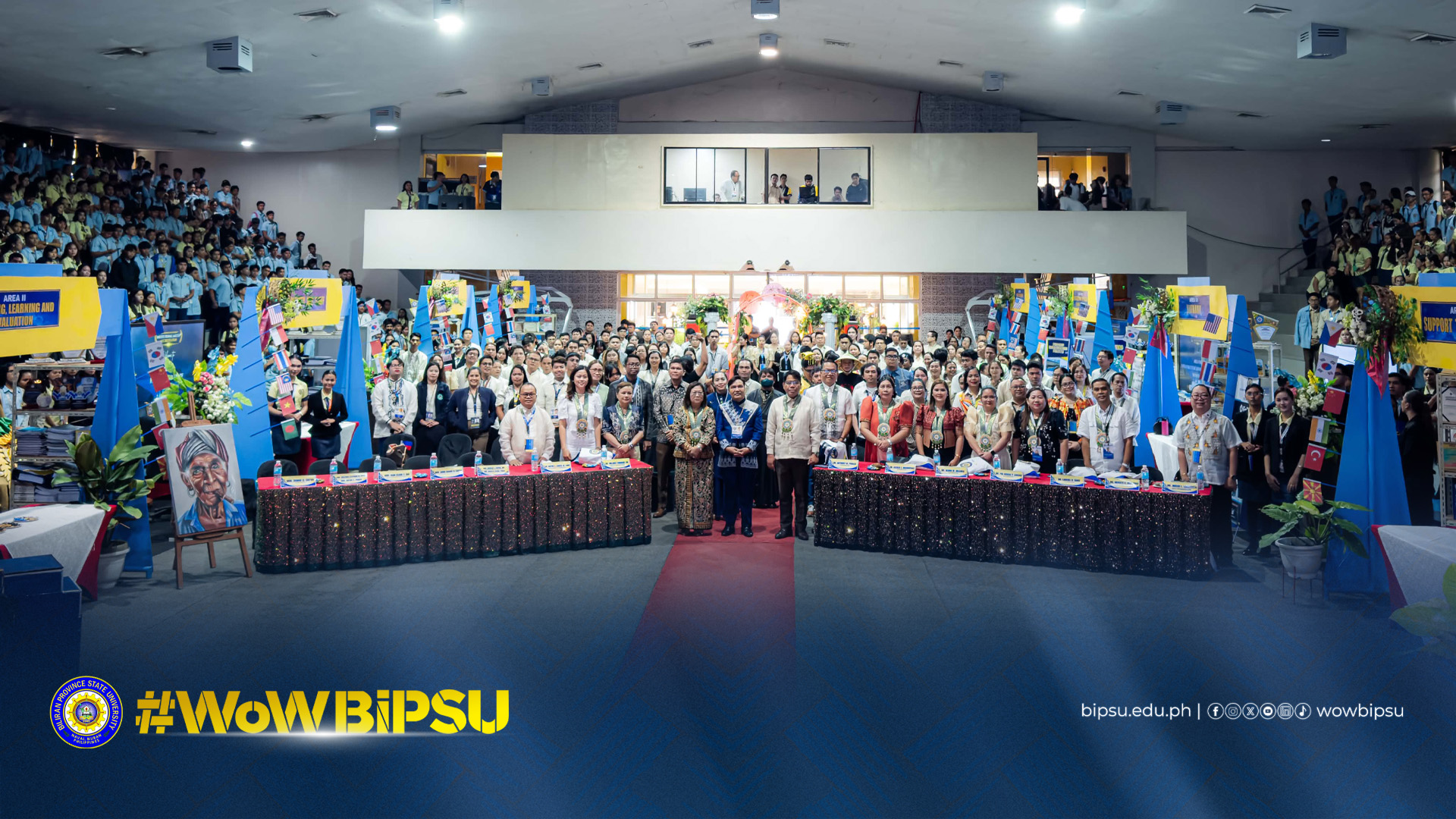
Biliran Province State University (BiPSU) formally opened its Institutional Accreditation through an opening program held today, July 28, at the BiPSU Gymnasium, officially commencing the three-day evaluation by the Accrediting Agency of Chartered Colleges and Universities in the Philippines (AACCUP).

The program gathered key BiPSU officials, faculty members, staff, students, and stakeholders to welcome the AACCUP accreditation team. It was also graced by Hon. Roselyn Espina-Paras, vice governor of Biliran, representing Governor Hon. Rogelio J. Espina, and Ms. Jean Clare Diu, private sector representative and member of the BiPSU Board of Regents.

In his opening message, University President Dr. Victor C. Cañezo, Jr. welcomed the accreditors and underscored the University’s commitment to strengthening its systems and processes.

“Today, we present BiPSU as one that is proud of how far it has come, at the same time determined to move forward,” said Dr. Cañezo. “For and on behalf of all the weavers, we open our University to this process with confidence and hope. May this accreditation affirm our strengths and bring us closer to the kind of university our students, our communities, and our people in the province and beyond truly deserve.” 

Dr. Milabel Enriquez Ho, AACCUP executive director and team coordinator/consultant, delivered the Statement of Purpose and presented the institutional accreditation team. In her message, she emphasized the University’s role in preparing its graduates for greater opportunities.

“You are now out of darkness. You are now in a bright community with better opportunities, and you are ready to take the world because BiPSU has made you, carved you, and shaped you to do what you are doing now,” said Dr. Ho.

The institutional accreditation team is composed of Dr. Anthony M. Penaso, team leader and lead accreditor for Area I – Governance and Management; Dr. Alona M. Belarga, lead accreditor for Area II – Teaching, Learning and Evaluation and Area III – Faculty and Staff; Dr. Cecilio L. Manarpaac, lead accreditor for Area IV – Research and Area V – Extension, Consultancy and Linkages; Dr. Lovenel D. Gako, lead accreditor for Area VI – Support to Students and Area VII – Library; and Dr. Pia Rhoda P. Lucero, lead accreditor for Area VIII – Infrastructure and Other Learning Resources and Area IX – Quality Assurance Culture. They are also joined by Ms. Merelyn G. Dela Cruz, AACCUP executive assistant, and Mr. Jimson L. Lamarroza, AACCUP IT staff.

The institutional accreditation will continue until July 30, covering BiPSU's systems and processes across key areas in support of its commitment to quality assurance, continuous improvement, and institutional excellence.

#WoWBiPSU

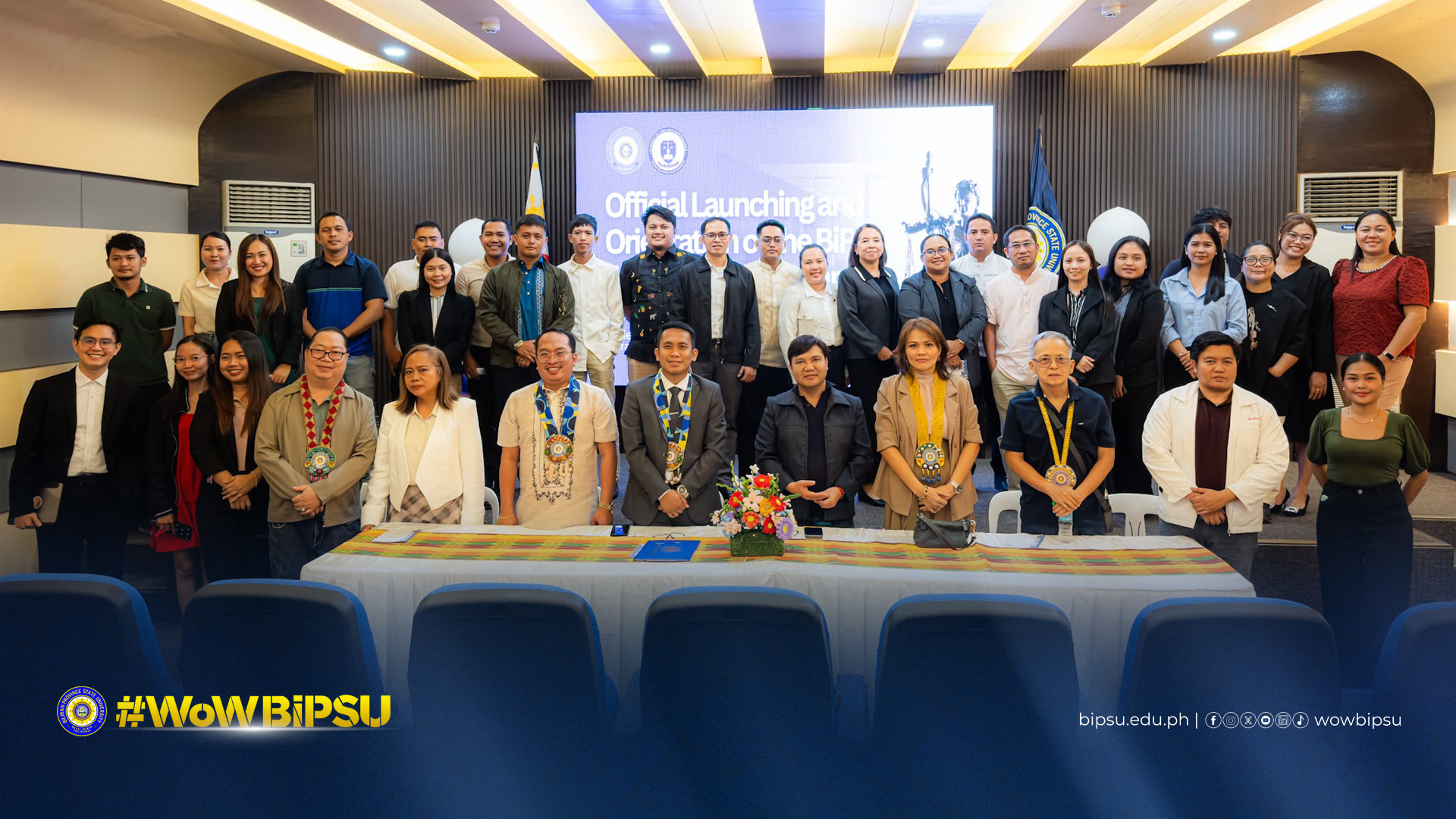
Vision turned into reality, Biliran Province State University (BiPSU) officially opened the doors of its Juris Doctor (JD) program, welcoming its pioneering batch of law students and professors during the launching and orientation program held on July 25 at the university Hyflex Audio-Visual Center (HAV-C).

This event marked the commencement of BiPSU’s newest academic offering under the School of Law and Governance (SoLGov), reflecting BiPSU's continued commitment to expanding access to quality higher education, strengthening public service, and contributing to regional development by producing future legal professionals.

Gathering the first cohort of JD students, the activity formally introduced them to the distinguished members of the legal profession who will serve as faculty members, including Judge Thea Gicela Nueve-Zamora, Atty. Judiel Pareja, Atty. Edison Oyag, Atty. Charmaine Lynn Tan-Calzado, Atty. Lois Philippe Pelito, and Atty. Dick Guiller Delfin.

A ceremonial signing of the Memorandum of Agreement (MOA) with the law professors also highlighted the occasion, signifying the university's partnership with experienced legal practitioners in delivering quality legal education.

A dream 15 years in the making

The launch of the Juris Doctor program represents the fulfillment of a vision that traces its roots a decade and half back.

BiPSU, then known as the Naval Institute of Technology (NIT), previously offered a Bachelor of Laws (LLB) program in 2003 through a consortium with the University of Eastern Philippines (UEP). This, however, was discontinued in 2011.

Now, after fifteen years, the university has revived legal education—not through a consortium—but by offering its own Juris Doctor program, a milestone that showcases the institution's academic growth and readiness to nurture the next generation of lawyers.

University President Dr. Victor Cañezo, Jr. shared that the establishment of the JD program is anchored on the university's commitment to providing accessible and affordable legal education for aspiring lawyers from Biliran and neighboring provinces.

More importantly, he emphasized that the initiative is about creating opportunities for deserving but less privileged students while producing competent legal professionals who will eventually serve both the province and the nation.

A brave new world of law

Addressing the pioneering batch, Dr. Cañezo welcomed the 25 admitted students from 48 applicants, reminding them that entering law school is not merely about earning a degree but embracing a lifelong commitment to justice, discipline, and public service.

"You are my newest weavers of worthiness," he told the students. Dr. Cañezo encouraged them to become instruments of change within their communities and challenged them to leave no opportunity unexplored.

The president also introduced his WoW principle as a guide throughout their legal education. W stands for discovering one's Why—the deeper purpose behind pursuing law, O reminds students to recognize the Opportunities before them, and the final W encourages them to Work on their why every day, allowing purpose to become the driving force behind perseverance.

He likewise underscored BiPSU's commitment to academic excellence, sharing that the university deliberately recruited competent law professors from Biliran and metro cities to ensure that students receive caliber legal education.

Building future lawyers

Dean of the SoLGov Atty. Delfin introduced his CASE framework as a guide to succeeding in law school.

He urged the students to: Calibrate themselves to the demands of legal education; Anchor themselves on integrity and discipline; Systematize their learning through organized study habits; and Execute what they have learned effectively through legal writing and practice.

In addition, Atty. Delfin prompted the pioneering class that success in law school requires consistency, resilience, and unwavering commitment to lifelong learning.

Law beyond the books

Delivering an inspirational message, Atty. Redentor Villordon, President of the Integrated Bar of the Philippines (IBP) Biliran Chapter, shared reflections on both national and international legal issues, illustrating the complexity and evolving nature of the legal profession.

"The law can be very near to us or far, and in all of these, not everything is as it seems,” he remarked. “There is always more to it," encouraging students to cultivate critical thinking and appreciate the deeper dimensions of the law beyond what is written in statutes.

Meanwhile, Biliran Provincial Prosecutor Edna Pitao-Honor stressed the growing demand for legal professionals in the province.

"Biliran is growing, the number of cases continues to increase every day, and our courtrooms are expanding—we need more lawyers because the community is watching," she said, emphasizing the vital role future lawyers will play in reinforcing the administration of justice.

Preparing for the journey ahead

As part of the orientation, students were introduced to the official BiPSU School of Law and Governance website and communication platforms, ensuring that they remain connected to academic updates and institutional announcements throughout their studies.

Likewise, they were oriented on the university library's resources, policies, and services designed to support legal research and scholarly work.

Atty. Sheena Estrella Bentor, Chairperson of the JD program, discussed the salient provisions of the Law Academic Manual and Student’s Manual, familiarizing the students with academic standards, institutional policies, and expectations that will aid them throughout their law school journey.

Said event was also attended by Vice President for Academic Affairs and Lifelong Learning Dr. Erwin Salvatierra, Vice President for Research, Innovation, and Societal Impact Dr. Roland Niez, and some members of the IBP-Biliran, who expressed their support for this endeavor.

As BiPSU officially embarks on this new chapter in legal education, the university affirms its mission of producing lawyers grounded not only in legal competence but also in integrity, compassion, and service—professionals prepared to uphold justice and become catalysts for positive transformation in Biliran and beyond.

#WoWBiPSU

First for the institution, Biliran Province State University (BiPSU) formally welcomed its teaching workforce for the Academic Year 2026–2027 through its Faculty Commissioning Rites and Dedication Ceremony, gathering faculty members from the Naval and Biliran campuses in a symbolic reinforcement of their commitment to quality education, ethical leadership, and public service.

Held on July 22 at the BiPSU Gymnasium, the ceremony marked a new tradition in the university's opening activities, emphasizing the noble calling of educators and their shared responsibility in advancing BiPSU's vision of academic excellence and nation-building.

Anchored on the theme, "Strengthening Teachers' Profound Moral Convictions in Navigating a Safer, Resilient, and Sustainable Learning Environment," the event served as a venue for faculty members to renew their dedication to professional integrity, learner-centered education, institutional resilience, and the university's strategic directions.

“We inaugurated and have gathered for this rites because we believe that every academic year should begin with a clear recognition of the responsibilities entrusted to every member of our teaching force,” University President Dr. Victor C. Cañezo, Jr. stated.

He highlighted the significance of commissioning its educators as BiPSU, the premier state university of Biliran province, plays an important role in developing competent professionals, responsible citizens, and future leaders—eminent that teaching remains one of society's most transformative professions.

Dr. Erwin G. Salvatierra, Vice President for Academic Affairs and Lifelong Learning, led the presentation of the faculty from various academic units.

Commissioned faculty included the School of Arts and Sciences (SAS), with 29 instructors headed by Dr. Ralph Arvic Arcenal; the School of Business and Management (SBM), with 53 instructors headed by Dr. Claire Theresa Bentor; the School of Criminal Justice Education (SCJE), with 24 instructors headed by Dr. Archie Ramirez; the School of Engineering (SoE), with 39 instructors headed by Dr. Carmel Sigrid Docallos; the School of Nursing and Health Sciences (SNHS), with 15 instructors headed by Dr. Jovy Dia Saniel; the School of Tourism and Hospitality Management (STHM), with 76 instructors headed by Dr. Estelito Salut Jr.; the School of Teacher Education–Naval Campus (STEd–Naval), with 85 instructors headed by Dr. Jason Ang; the School of Technology and Computer Studies (STCS), with 65 instructors headed by Dr. Jinky Macabago; the School of Law and Governance (SoLGov), with six instructors headed by Atty. Dick Guiller Delfin; the School of Agri-Industries and Natural Resource Management (SAINaRM), with 36 instructors headed by Dr. Randy Villarin; the School of Teacher Education–Biliran Campus (STEd–Biliran), with 26 instructors headed by Dr. Naneta Panit; and the School of Graduate Studies (SGS), with 13 instructors headed by Dr. Analiza Calles.

A solemn candle-lighting ceremony followed, with faculty members lighting their candles as a collective acceptance and expression of their dedication to illuminate minds, uphold academic brilliance, and faithfully fulfill their vocation as educators.

Providing inspiration to this milestone was Atty. James Lee Cundangan, Assistant Solicitor General of the Office of the Solicitor General, who challenged the attendees to become educators who leave lasting impact beyond the classroom.

Drawing from his experiences in public service, ASG. Cundangan encouraged them to manage classrooms with both authority and empathy, reminding that every decision inside the classroom contributes to the character formation of future professionals and responsible citizens.

Furthermore, ASG. Cundangan urged the faculty to rise above mediocrity, to be unordinary by continuously pursuing excellence and embracing innovation. He likewise prompted them to cultivate gratitude, recognizing that the opportunity to educate others is both a privilege and a profound responsibility.

Through this commissioning rite, the university has progressed its weave of transformative education where BiPSU teachers are committed not only to imparting knowledge, but also to shaping character, nurturing hope, and creating meaningful change in the lives of their students and the communities they serve.

#WoWBiPSU

[This article aligns with the United Nations Sustainable Development Goals (SDGs), particularly SDG 4 (Quality Education) by promoting quality teaching, professional integrity, and learner-centered education, and SDG 16 (Peace, Justice and Strong Institutions) through its emphasis on ethical leadership, accountability, and public service in higher education.]

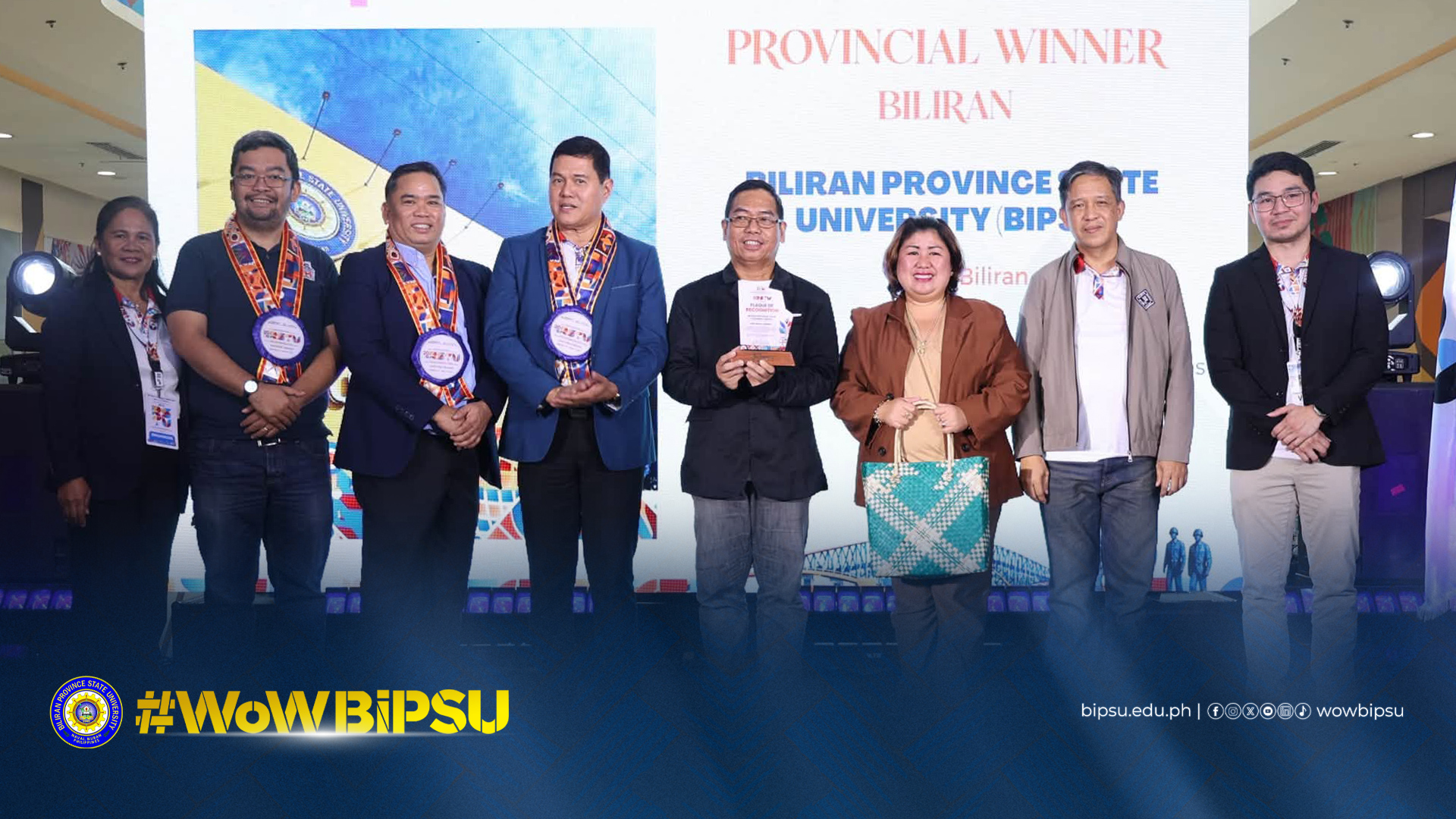
Biliran Province State University (BiPSU) was recognized by the Department of Science and Technology (DOST) Regional Office VIII as the Provincial Winner for its outstanding support and active collaboration under the DOST-Community Empowerment through Science and Technology (CEST) Program during the 2026 Regional Science, Technology, and Innovation Week (RSTW) held on July 15–17 at Robinsons North, Tacloban City.

The award recognized BiPSU’s implementation of the Impact Study on the Development of the Potable Water Purification System in Higatangan Island, Naval, Biliran. The project addressed the community's long-standing need for safe and clean drinking water through the installation of a solar-powered potable water purification facility.

Led by Engr. Bryan C. Bernil, the project demonstrated how research and extension initiatives can provide practical solutions to community concerns. The water purification system has improved access to safe drinking water and contributed to the well-being of the residents of the island.

Dr. Pearl Irish V. De Paz, Director of the Office of Research and Knowledge Management, and Engr. Bernil received the Plaque of Recognition on behalf of the University during the awarding ceremony.

The recognition affirms BiPSU’s commitment to developing research-based initiatives and extension programs that provide solutions to community needs.

#WoWBiPSU

[This article supports the Sustainable Development Goals (SDGs), particularly SDG 6: Clean Water and Sanitation, SDG 7: Affordable and Clean Energy, and SDG 9: Industry, Innovation, and Infrastructure.]

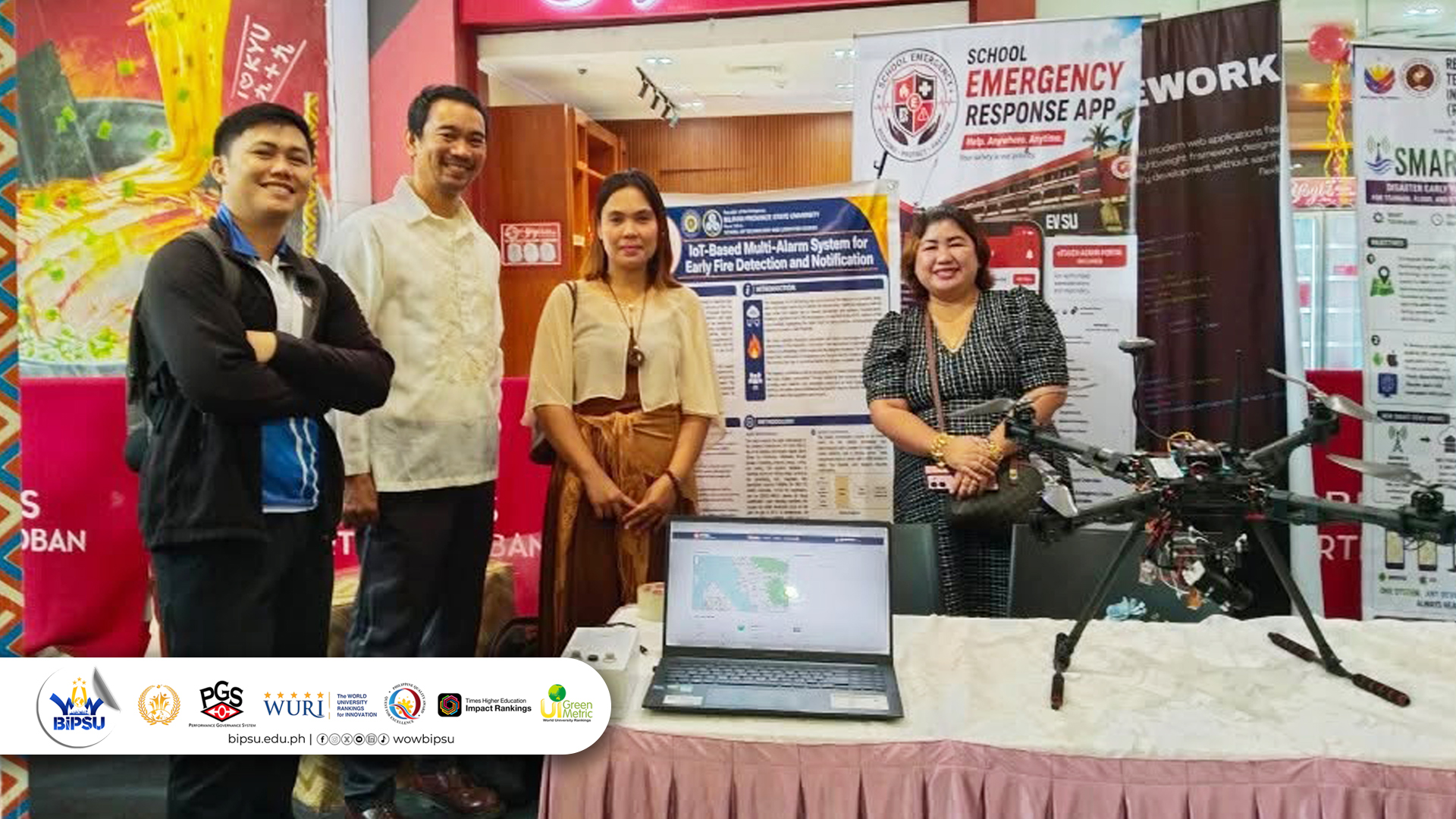
Biliran Province State University (BiPSU) participated in the 2026 Regional Science, Technology, and Innovation (RSTW) Week at Robinsons North Tacloban, joining government agencies, higher education institutions, local government units, and other stakeholders in showcasing research, technologies, and innovations that support regional development.

Representing BiPSU was the Office of Research and Knowledge Management, led by Director Dr. Pearl Irish V. De Paz, together with Mr. Jeremy Balondo, Chairperson of the Food Processing Research and Development Center (FRDC), Mr. Mark Wilson C. Sulla, Mr. Neil Denzel Queipo, and Ms. Ma. Shiela Torregoza.

Featured during the exhibit was the university's IoT-Based Multi-Alarm System for Fire Detection and Notification, a fire detection system designed to monitor environmental conditions in real time using Internet of Things (IoT) technology. When gas concentration reaches 500 parts per million (ppm) or the temperature reaches 50°C, the system automatically activates a GSM module that sends text message alerts to homeowners and fire responders, allowing for a quicker emergency response and helping reduce fire-related damage.

Biliran Governor Hon. Rogelio J. Espina also visited the BiPSU exhibit and viewed the university's innovation. During his visit, he expressed interest in the project's potential application to strengthen public safety and disaster preparedness initiatives across the province.

Visitors are encouraged to explore the exhibits, which run from July 15–17, and learn about the research, technologies, and innovations presented by participating agencies and institutions throughout the three-day event.

#WoWBiPSU

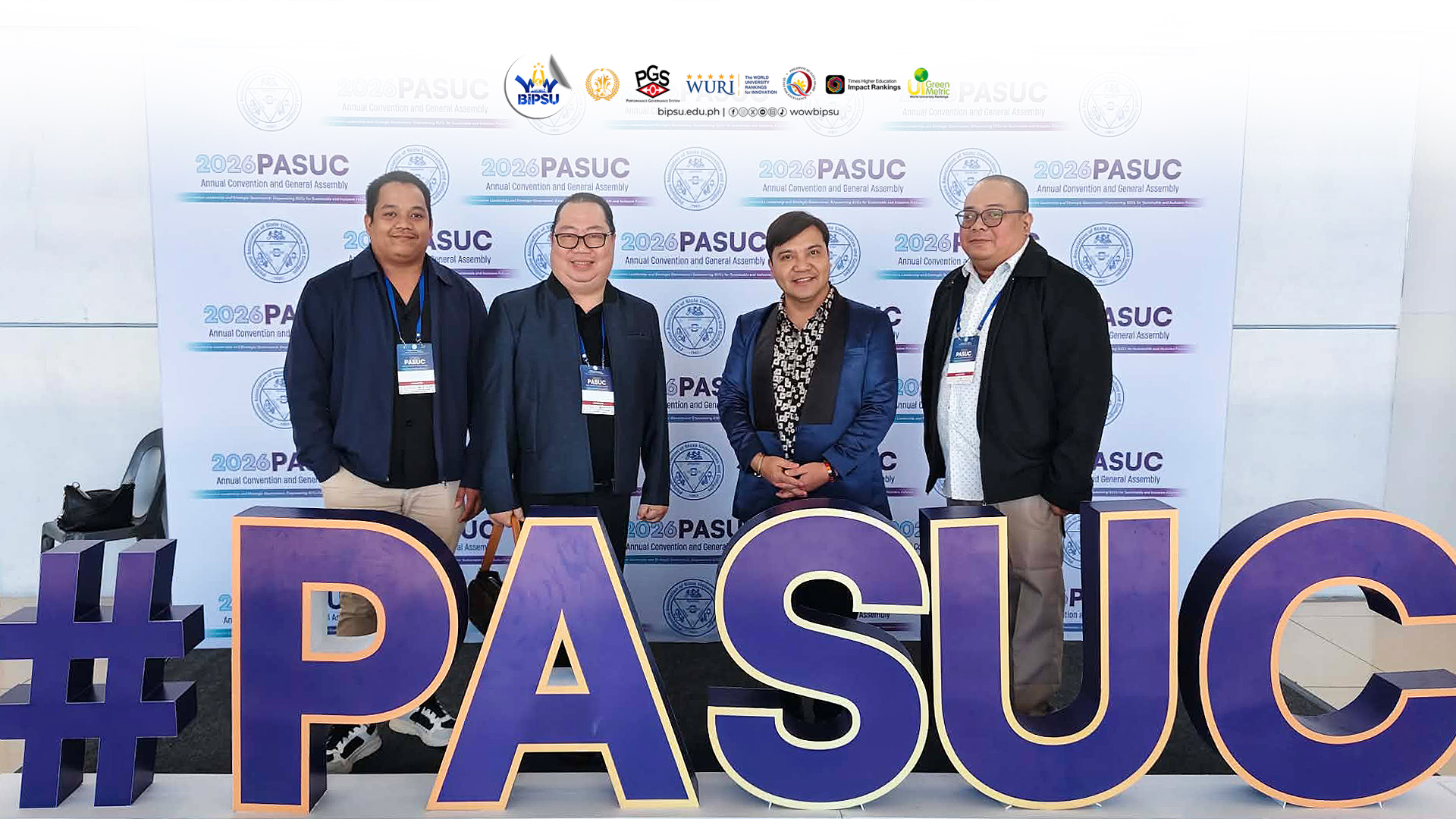
Biliran Province State University President Dr. Victor C. Cañezo Jr. led the university's delegation to the 2026 Philippine Association of State Universities and Colleges (PASUC) Annual Convention and General Assembly, held on July 13–15 at the SMX Convention Center Manila, Pasay City.

The convention, anchored on the theme, "Transformative Leadership and Strategic Governance: Empowering SUCs for Sustainable and Inclusive Futures," commemorated the 59th Founding Anniversary of PASUC and served as a venue for strengthening collaboration among SUCs and national government agencies.

Joining him were Dr. Erwin G. Salvatierra, vice president for Academic Affairs and Lifelong Learning; Engr. Paul Mathew S. Bentor, chairperson of the Management Information Systems Office, and Engr. Joshua Gibson Fuentes, executive assistant to the President.

The three-day gathering brought together presidents, administrators, policymakers, researchers, and higher education leaders from state universities and colleges (SUCs) across the country to discuss emerging trends, governance reforms, innovation, digital transformation, internationalization, research commercialization, and institutional resilience. 

Throughout the convention, the BiPSU delegation participated in plenary sessions, high-level dialogues, and strategic discussions covering governance and accountability, innovation and partnerships, instruction and student success, digital transformation, human capital development, and research commercialization.

During the election of PASUC national and regional officers on the first day, incumbent Batangas State University President Dr. Tirso A. Ronquillo was reelected PASUC President for another two-year term.

Meanwhile, Dr. Cañezo was unanimously reelected as Chairperson of PASUC Region VIII by the regional association’s members present during the assembly.

#WoWBiPSU 

Page 2 of 66

Brilliance. Innovation. Progress. Service and Unity
P.Inocentes St, Naval, Biliran Philippines 6560

(053) 507-0014
op@bipsu.edu.ph